The Where's Waldo of the 1500s
This summer I did a two-week trip to Italy with my girlfriend starting in Rome, spending a night in Montepulciano, and finishing up in Florence. In addition to eating copious gelato and pasta and blasting AC in the Airbnbs to cool off after 100°F days, we visited a lot of museums. One of these was Le Gallerie degli Uffizi in Florence, which is known for its collection of Botticellis, Da Vincis, and Caravaggios.
1
Medusa is Caravaggio's better-known piece there, but I much preferred Bacchus—placid where he's usually revelrous, dirty pillows concealed beneath the opulence, leaves beginning to brown and fruit beginning to rot, a delicate Venetian tazza held in dirty fingers—a god subtly on the turn. 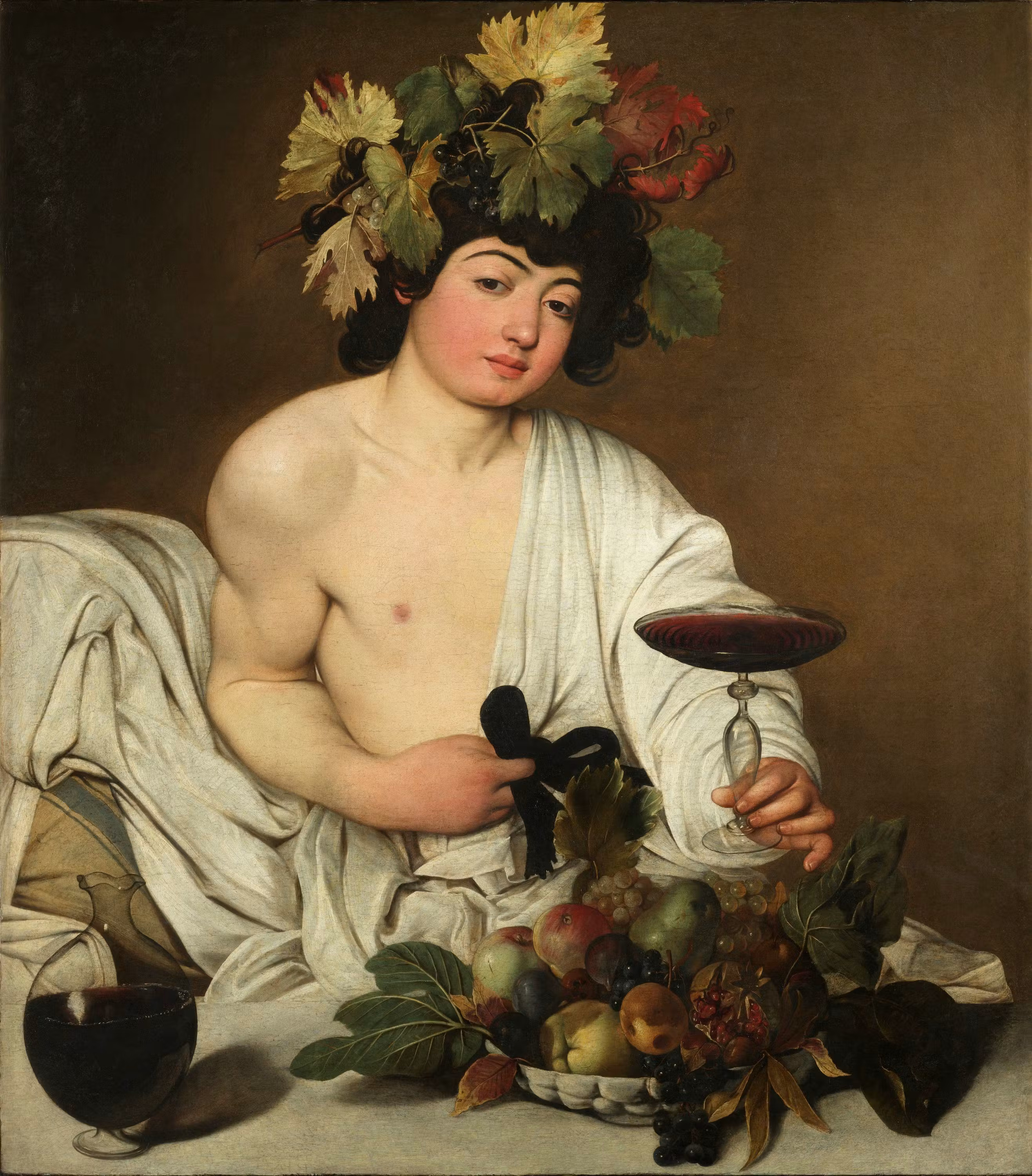
And yeah, The Birth of Venus is good. Really good.
2
Though in my opinion Primavera gets slept on. Venus shows one nipple and everyone loses their mind! 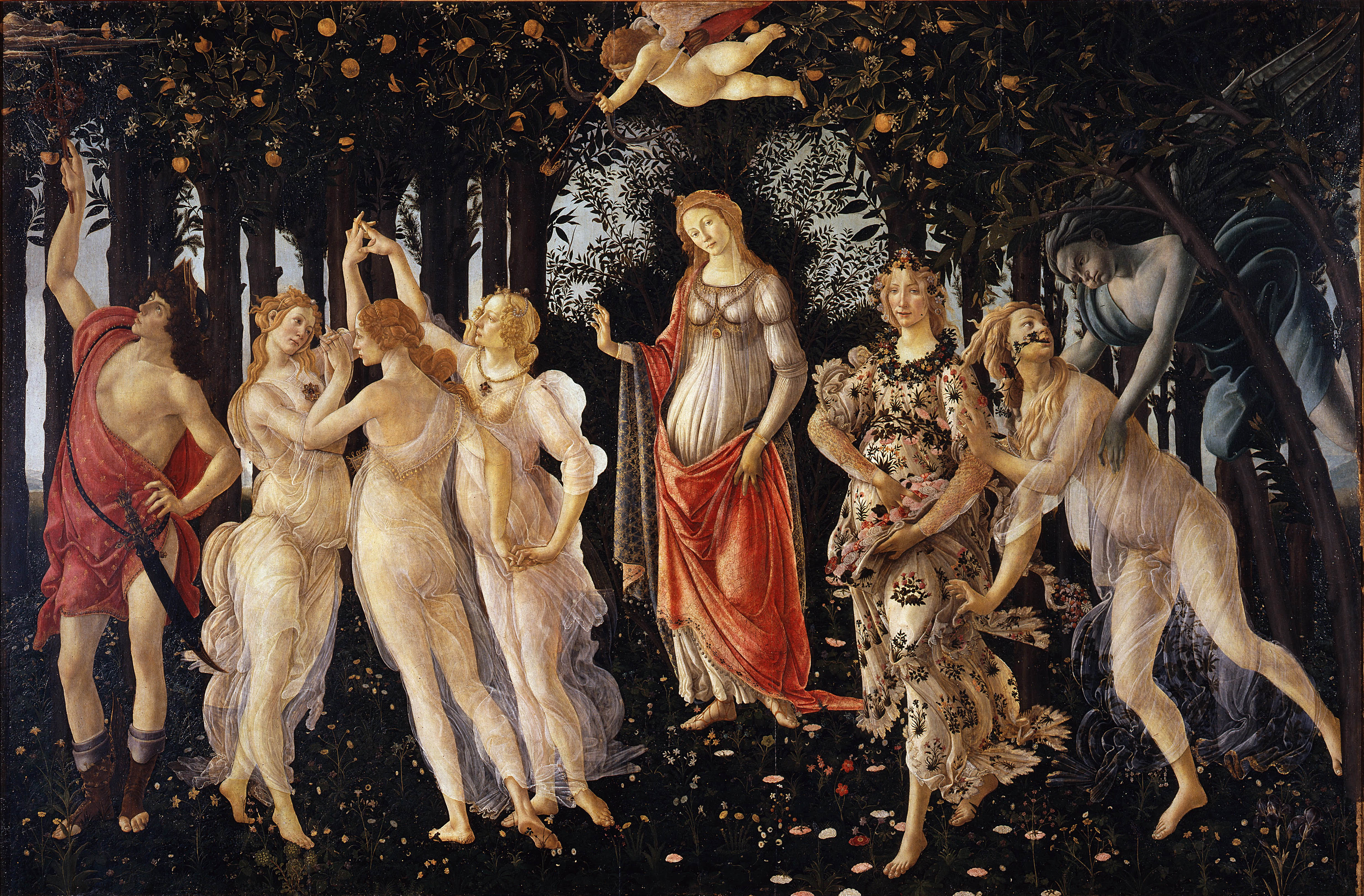 But the famous pieces weren't what I kept thinking about after we left.
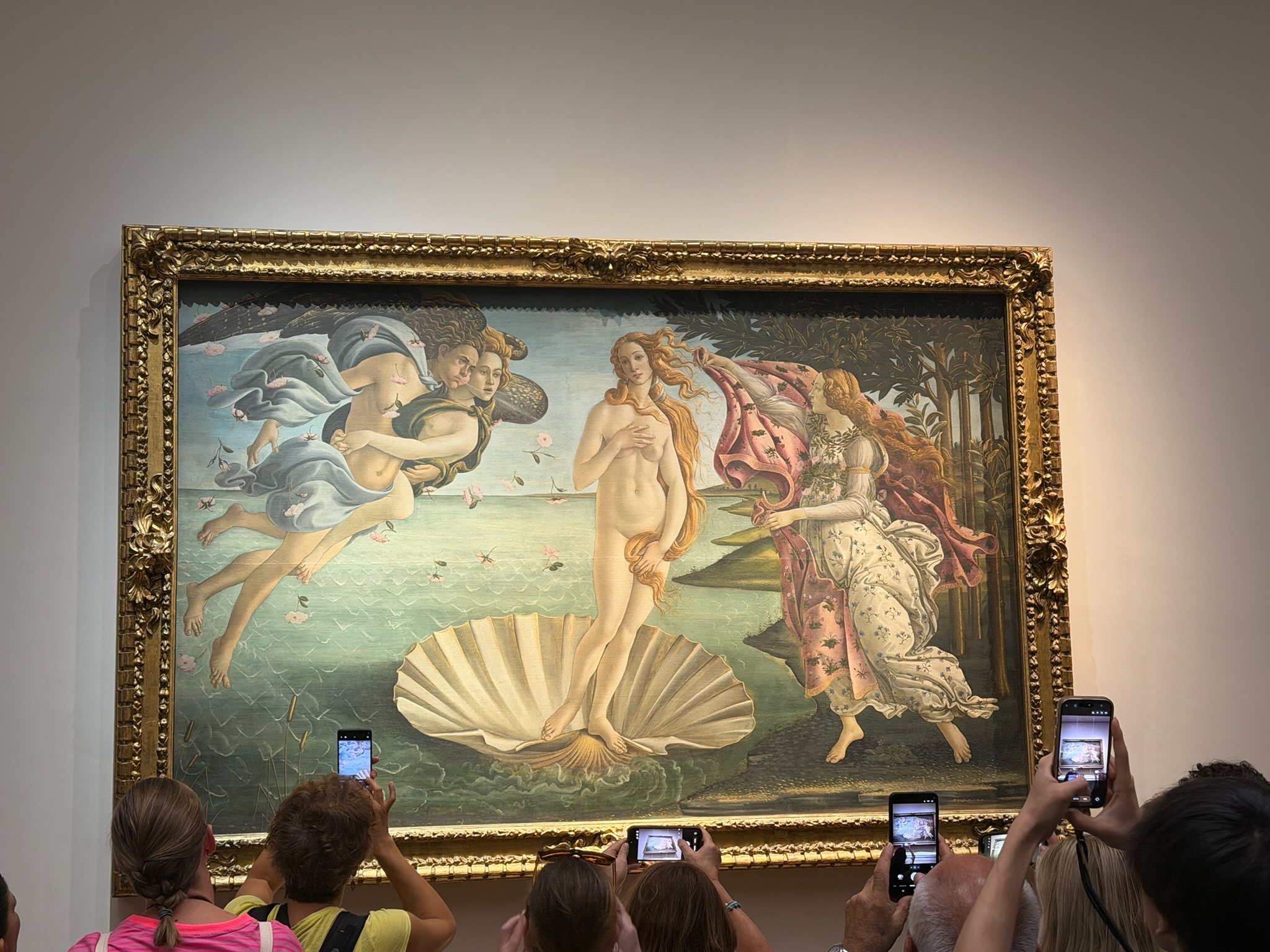
I'm not like the other girls
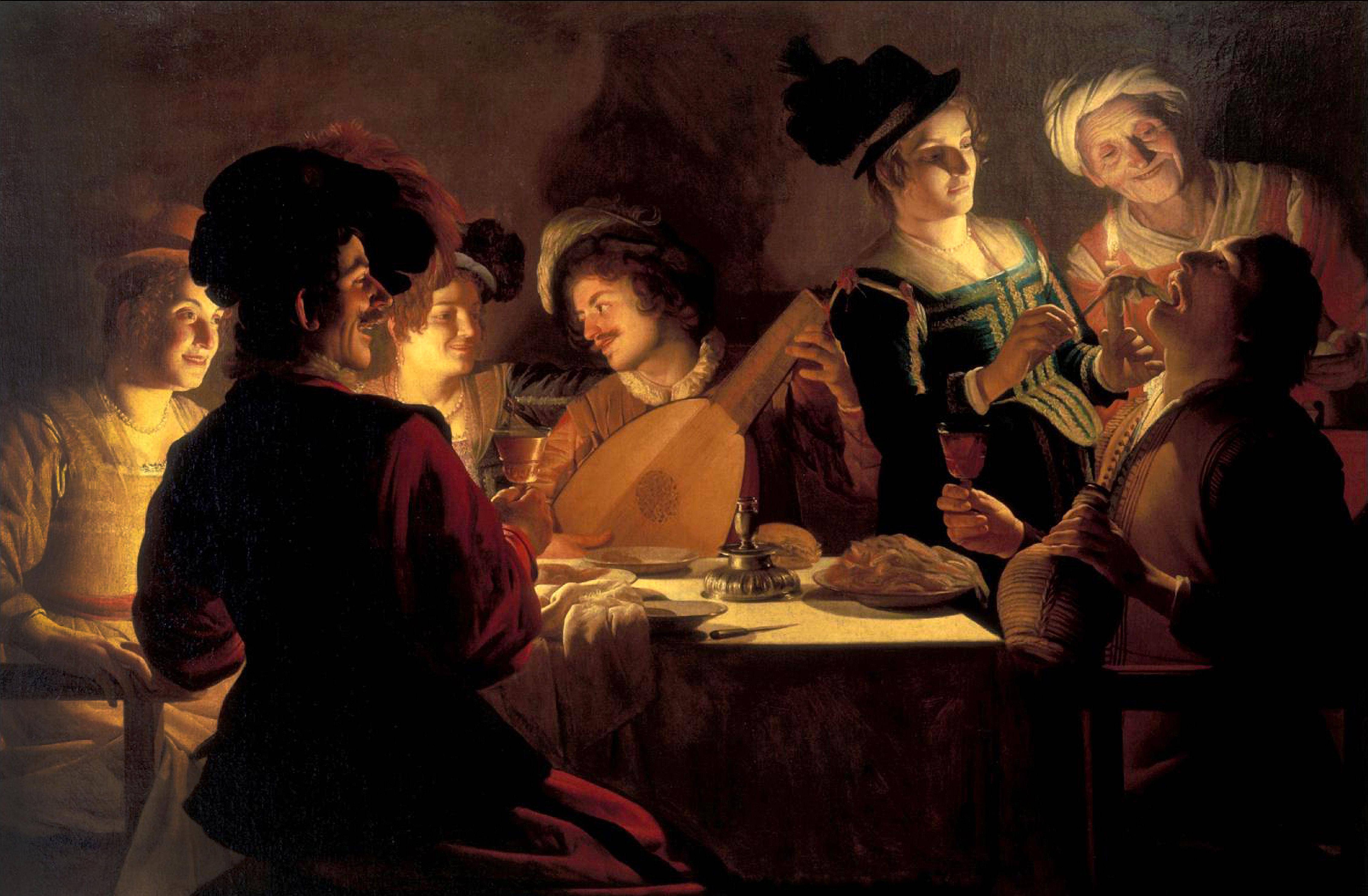
Instead, three pieces stuck with me. The first was van Honthorst's Supper with a Lute Player, which certainly relies on Caravaggio's popularization of chiaroscuro, but in a way that feels more inviting than stark, van Honthorst's light drawing me in where Caravaggio's shadows push me out. This was a pretty hasty photograph 3 I prefer to not look at art through my phone, so my photos are more akin to digital bookmarks. so feel free to click in to see a more high-res version! The scan also emphasizes how impactful the curator's display choices are: the differences in shadowing are stark, and it's hard to digitally capture the experience of seeing it in person.
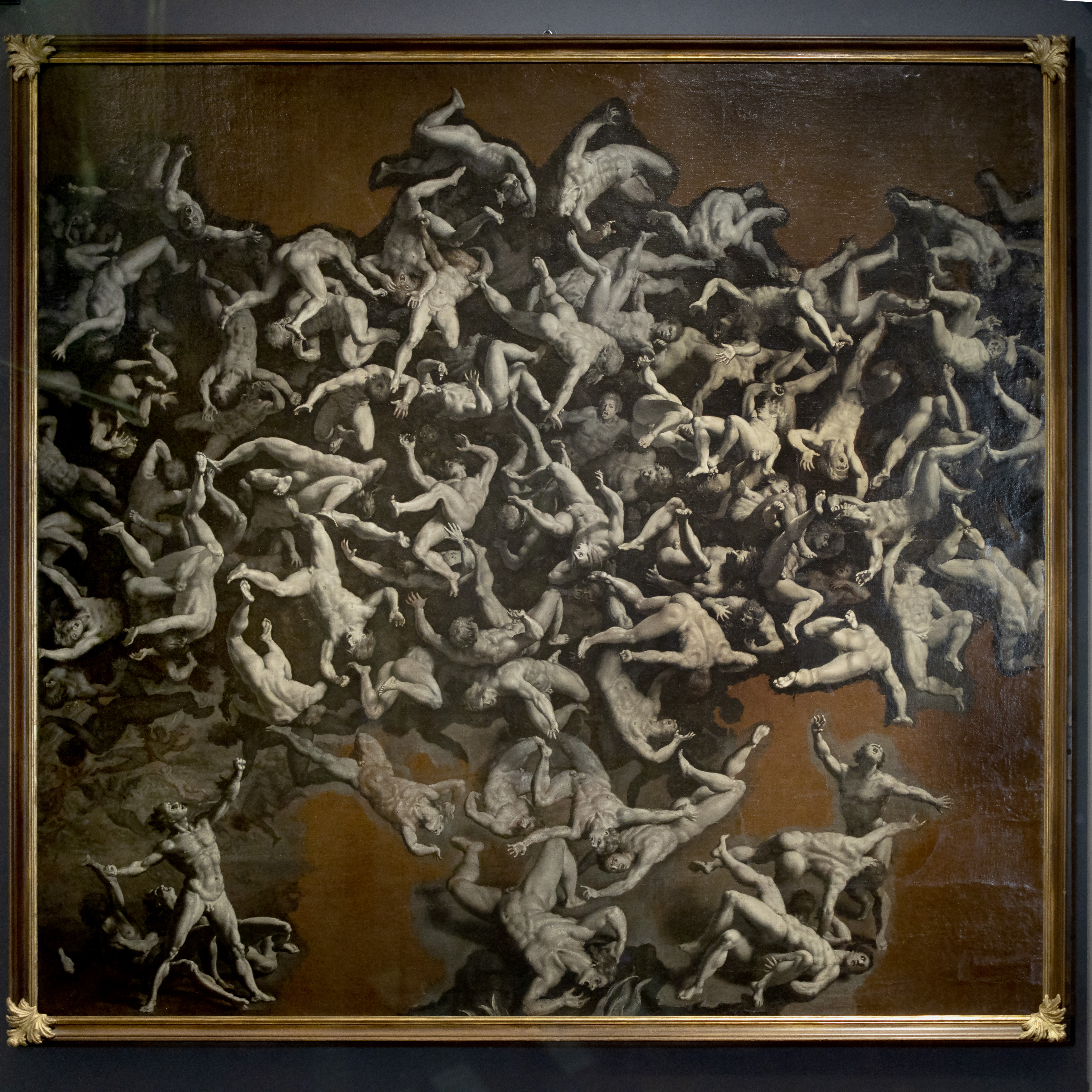
The second piece was Andrea Commodi's The Fall of the Rebel Angels. My photo of this is likewise quite bad, but it gives a certain cinéma vérité, so I'll force you to click in again to actually make out the piece. This is a preparatory painting for a fresco that never materialized, but for me that only adds to it, the incomplete nature of the piece a parallel to the angels' fall. It feels like an Escher piece out of time, fractal bodies paying the singular price of a plural sin, unified by the lack of Satan: for they are angels, all.
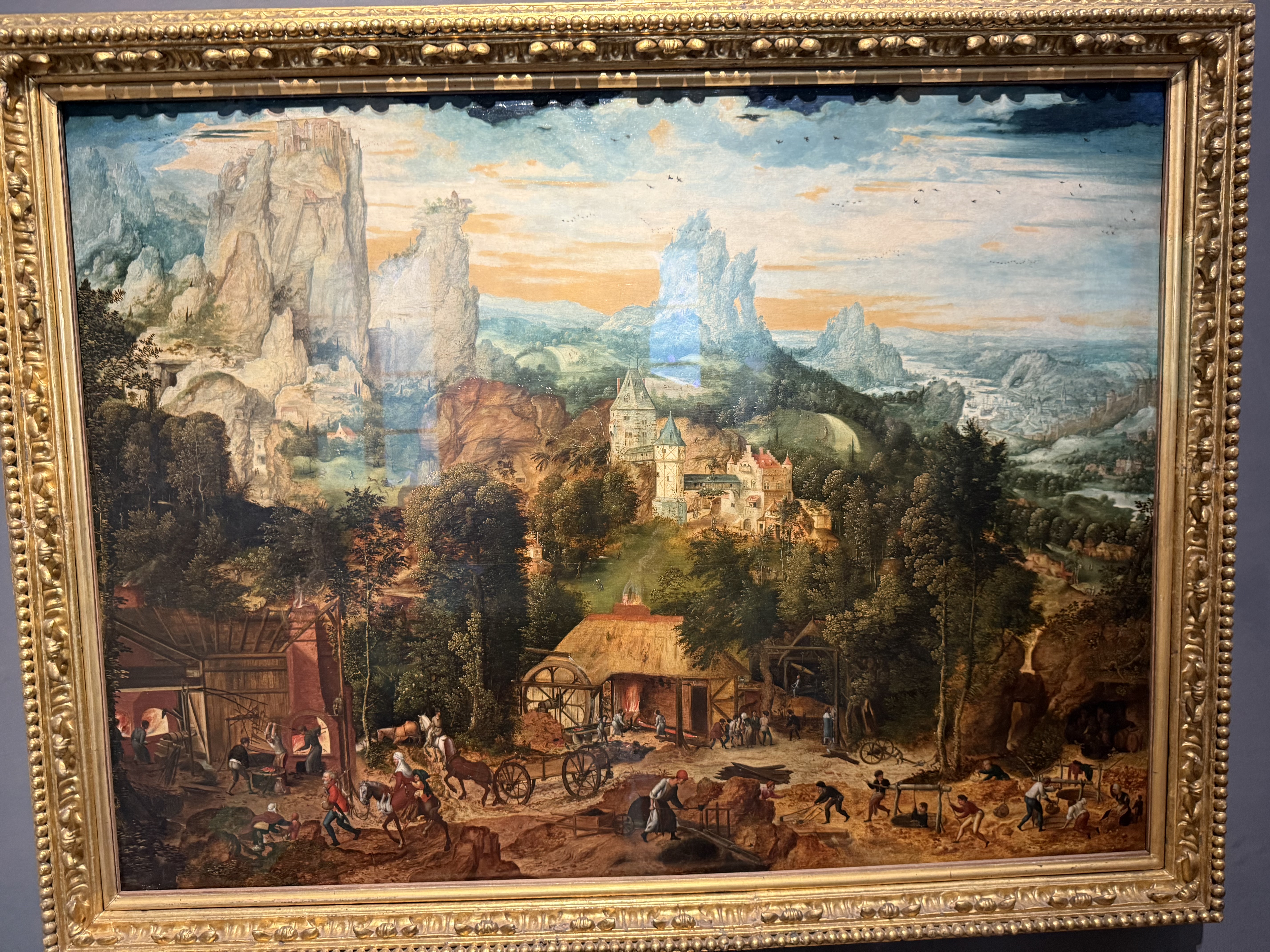
But it's the third that sucked me in: Landscape with Mines
4
Also called Landscape with a Foundry or Landscape with a Metal Foundry or Landscape with Forge—as we'll see, both met de Bles and his works are more mystery than certainty, making consistent naming a challenge.
by Herri met de Bles. It definitely got a boost by being different from the surrounding art
5
At this point in the trip I'd seen enough religious iconography in tempera on wooden panels with gold leaf featuring a baby Jesus to last me a lifetime. I think I lost the final shred of my patience in the room explaining the difference between 1300s and 1400s wood choices for visually identical panels. You can say a lot about modern art but at a minimum it's varied.
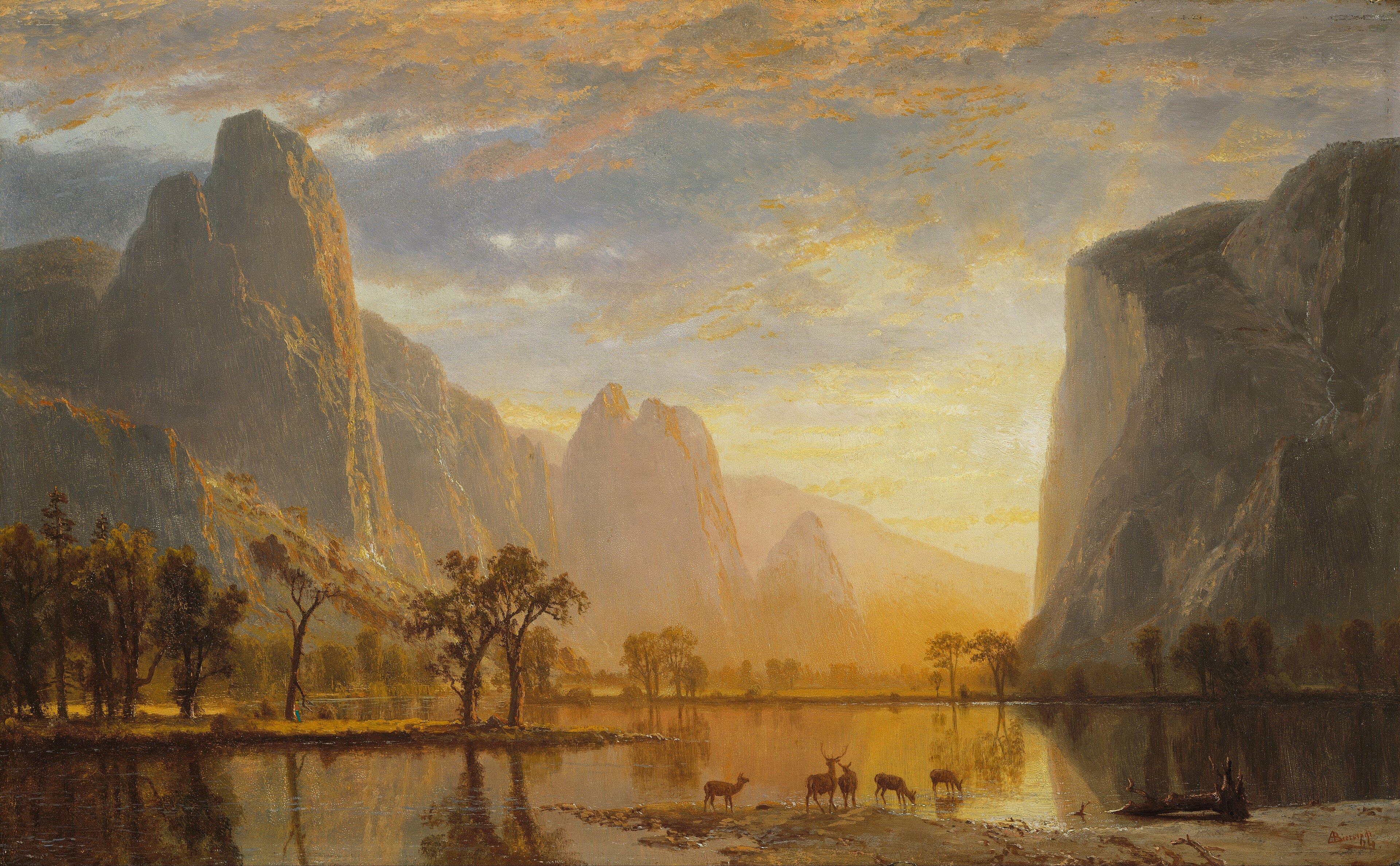
but it's also the kind of piece I always get entranced by: precipitous cliffs like a Bierstadt,
6
Maybe my favorite artist for what he does with light and trees. His piece Sunlight and Shadow is on display at the de Young in San Francisco and I have multiple photos on my phone of it from loving it every time I go. 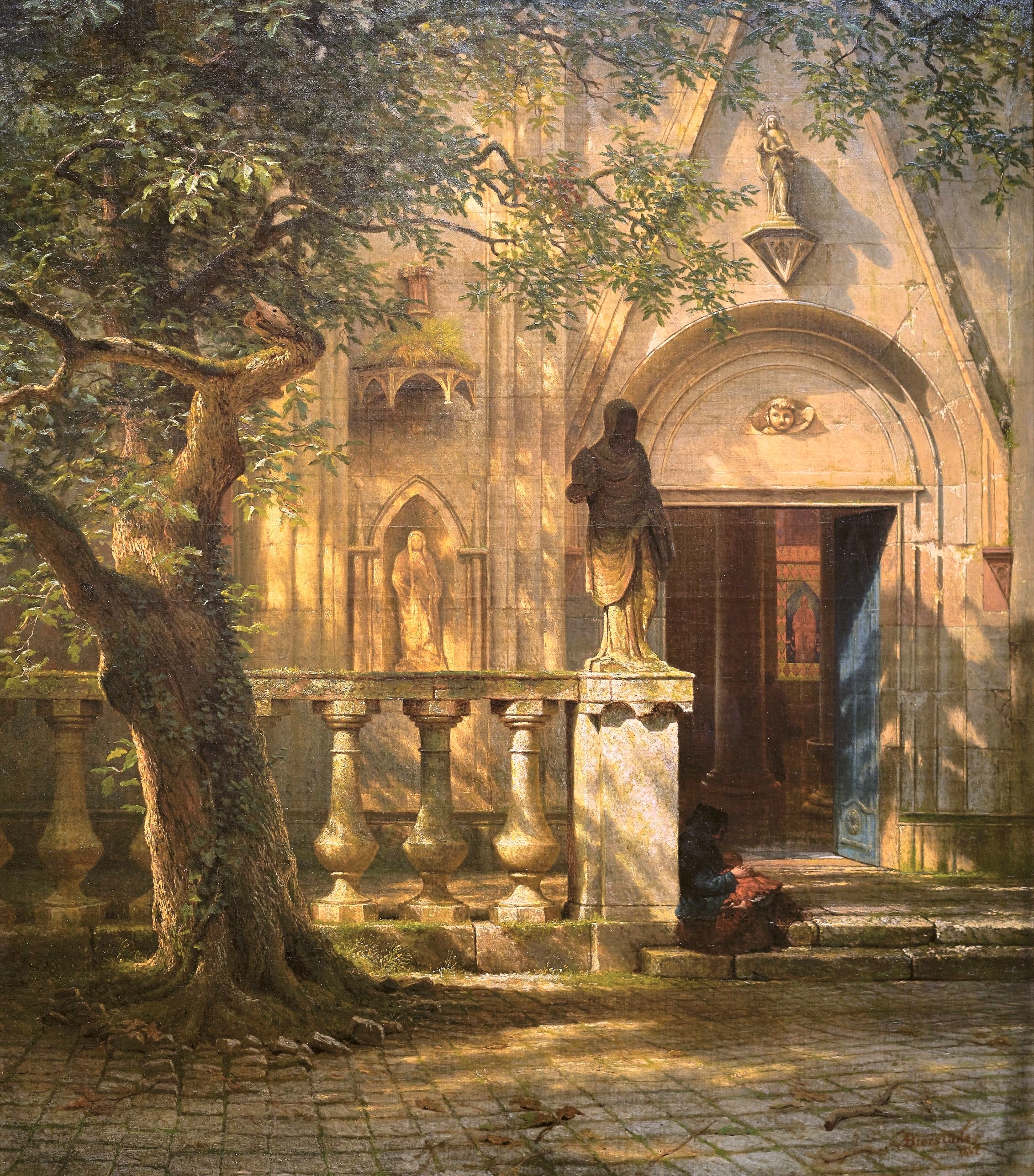 people intertwined with nature, at work living their lives, all with birds sweeping around for scale. It's those birds that have made me think about this piece a lot more since though, and one bird in particular.
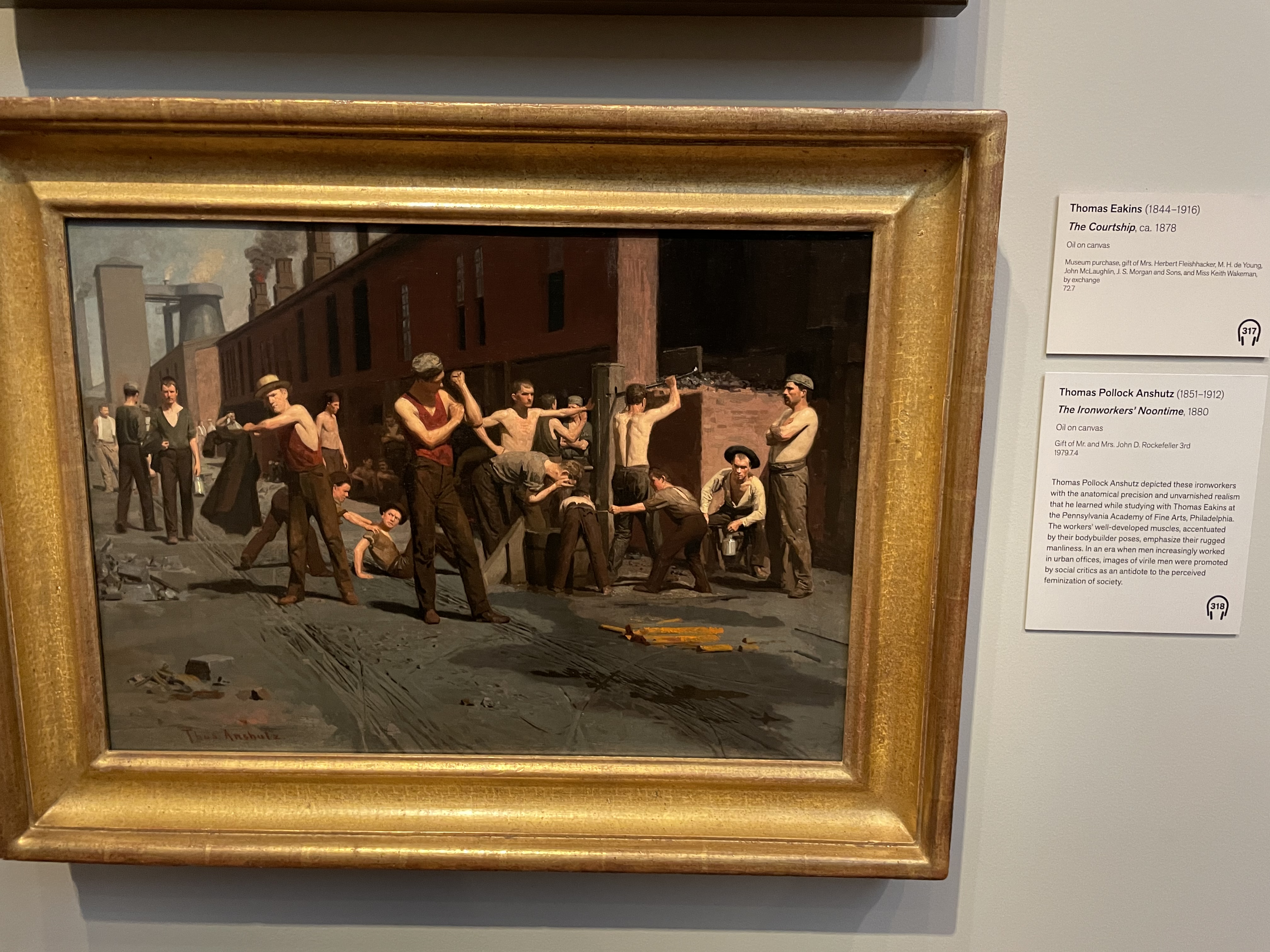
And in the blue corner ... il Civetta!
Here's the placard that was next to the piece (emphasis is mine).
Herri de Bles detto MET DE BLES o il CIVETTA
Landscape with Mines
1525-1527oil on canvas
The ore being mined in the picture is iron, by the indirect method which became widespread in the 16th century. The action takes place in the foreground, peopled with tiny figures, against a backdrop of woods and tall mountains. Civetta was nicknamed "the owl" for his habit of signing some of his works—including this one—with a picture of the bird. His paintings were much appreciated for their originality and naturalistic detail. This Landscape may have entered the Medici collections precisely because the subject of mines tied in with Francesco I's interest in raw materials and mining techniques.
His nickname, Civetta, is Italian for "little owl" (specifically referencing Athene noctua
7
It's all well and good that we don't want to name species after people anymore but what's the line on gods? Medusa was cursed by Athena because she was raped by Poseidon. Talk about victim blaming! And now we commemorate Athena in this cute little owl?? 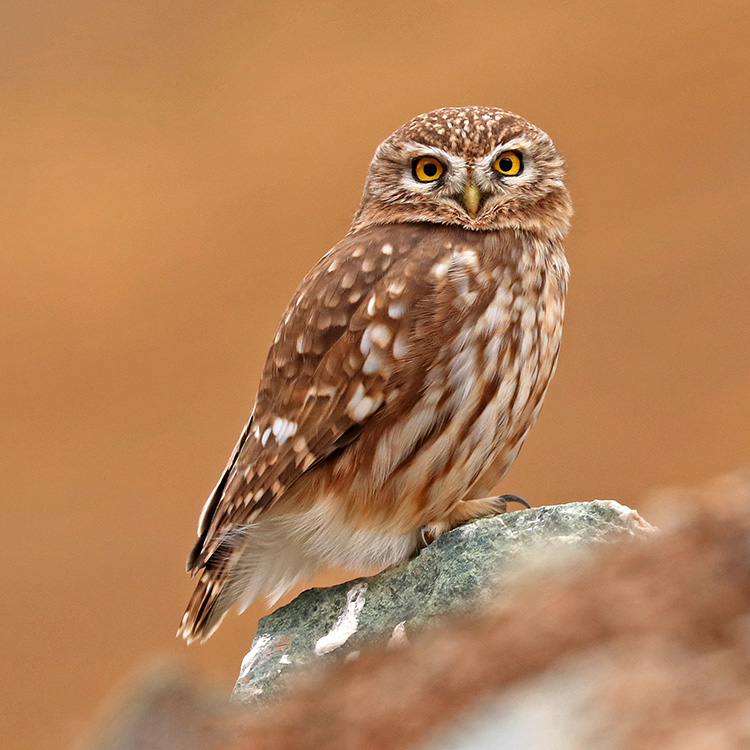 ). My photo above is a little blurry, so here's a high-res version of Landscape with Mines.
8
Well, mostly. If you look closely you'll notice these are actually different pieces—it's easiest to see in the glen above the forge on the left. We'll come back to this discrepancy, but the owl's in the same spot in both pieces so don't worry for now.
Can you find the owl? Click in and pan around!
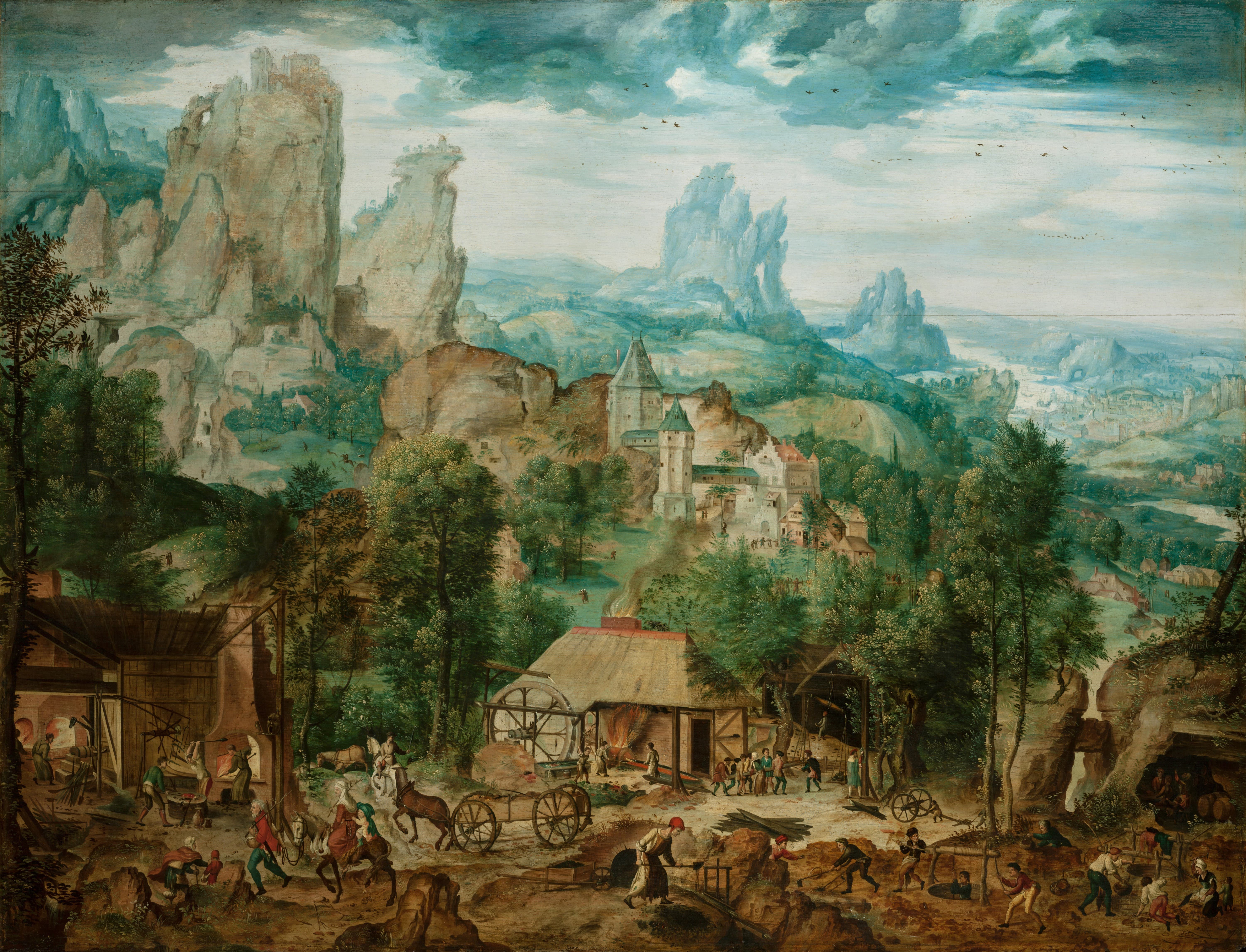
Did you find it? 9 I'm honorbound to confess that V beat me to it at the time. If not you can click to see the answer. I was immediately captured by "his habit of signing some of his works". Which works? Are there more 'spot the owls' in beautiful landscapes like some sort of medieval Where's Waldo? Why have I never heard of this guy before?
Who is Herri?
The opening sentence of his Wikipedia page immediately sets the stage: "Herri met de Bles, also known as Henri Bles, Herri de Dinant, Herry de Patinir, (c. 1490 – after 1566)". There's nothing quite like being immediately hit by three versions of someone's first name and a lower bound on death date to realize that we just don't know that much. In fact, much as your high school English teachers cautioned, 10 I'm not sure if they're still worried about this. Maybe the new evil is LLM citations, not Wikipedia. Maybe the new evil is that no one looked at a primary source. Maybe it's that no one has even looked at the paper they turned in. It's a rough time to be a high school English teacher. Wikipedia is wrong 11 Admittedly with this much ambiguity it's hard to firmly call something 'wrong'. Maybe we should get a Lean proof involved to standardize truth. about even this!
Looking at the Rijksmuseum biography for his piece Paradise
12
Unfortunately there's no known owl in it, though there are a lot of animals. 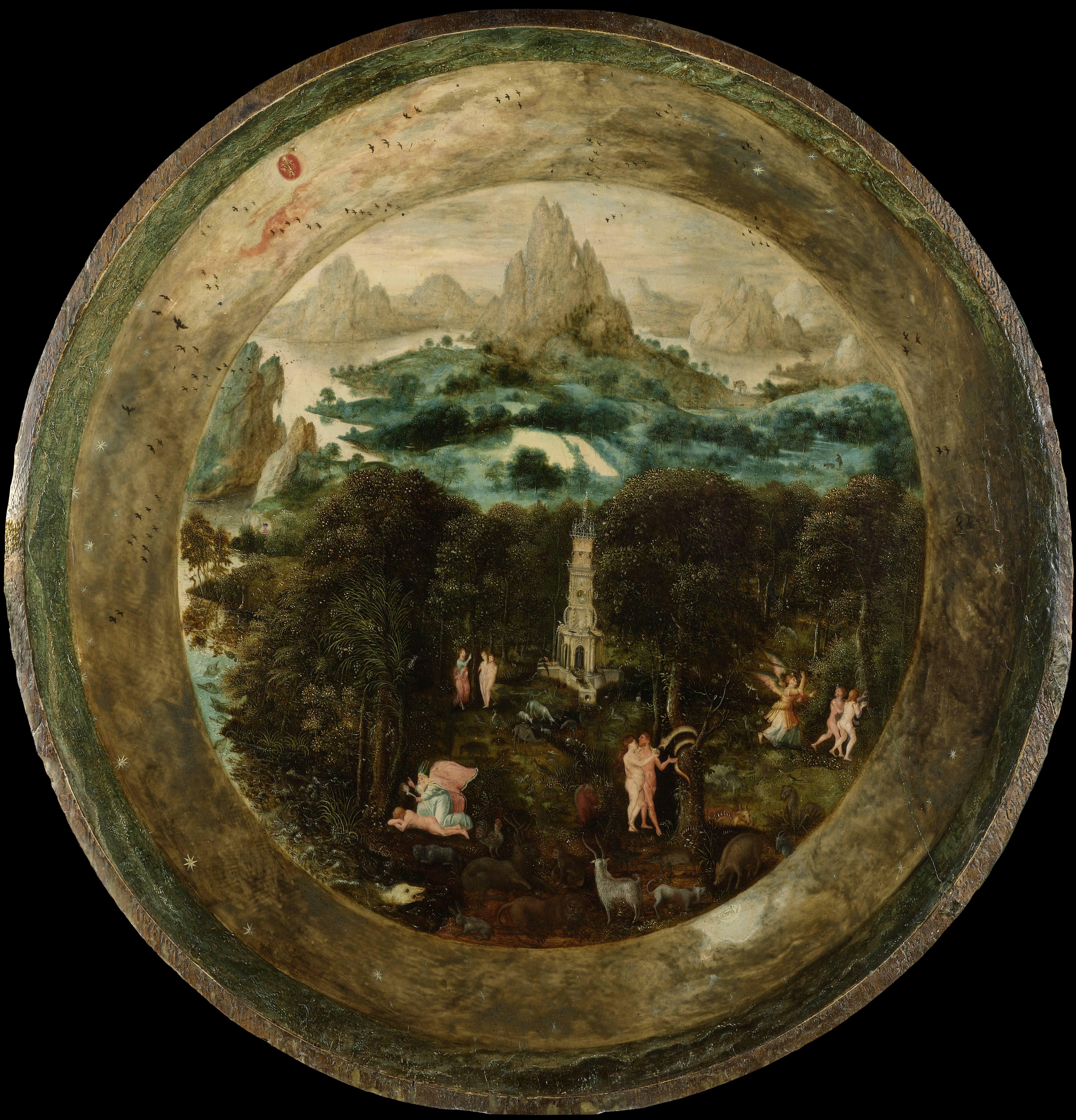 immediately counters the 1490 birthdate:
"Today it is generally accepted that Herri met de Bles 13 "met de Bles" is not really a last name, it's an epithet meaning "with the blaze" in Dutch. This ostensibly refers to a white streak in his hair, which is referenced in van Mander's 1604 Het Schilder-Boeck (though unfortunately not capturable by Jan Wierix's 1572 monochromatic engraving).
is probably the same person as the ‘Herry de Patenir’ who was registered as a free master in the ledgers of the Antwerp painters’ guild in 1535. His date of birth is accordingly placed around 1510; in the past it was situated between 1490 and 1500."
All of this is vague for one reason, which also explains why there's no definitive naming for his work.
"No information about the painter Herri met de Bles written during his lifetime has been found, and none of his works are signed or dated."
This likely also explains why 'il Civetta' took off as a nickname/calling card: there's no other way to unify his works. The biography also explains where the estimate of his death comes from.
"Bles’s date of death is also unknown, but according to a handwritten note in an early edition of Lampsonius he was still alive in 1550. This agrees with Van Mander’s statement that Bles was the teacher of Frans Mostaert (c. 1534-60), who was about 16 years old in 1550. Van Mander probably got that information from Bartholomeus Spranger, who was himself a pupil of Mostaert’s. Guicciardini lists Bles [Hendrick van Dinant] in his Descrittione di tutti i paesi bassi of 1567 among other artists who were deceased by then. Thus the publishing date of 1567 functions as a terminus ante quem 14 Terminus ante quem or TAQ for 'limit before which', or the latest it could happen. This is in contrast to Terminus post quem, or TPQ for 'limit after which', or the earliest something could happen. Thus any event is bounded by [TPQ..TAQ], or in the case of his death, [1550..1567]. for Bles’s year of death."
This also makes Wikipedia's "after 1566" likely outright wrong, as I couldn't find any source for it. 15 Wikipedia references "recently discovered contemporary documents" but an edit conjured that terminology out of nowhere, and likely just stems from a misreading of "before 1567" (I emailed RKD to find out). Regardless, it's hard to know who he was, or when and where he lived and died. The lack of signatures also makes it hard to conclusively delineate originals from copies, either by his contemporaries or by those in his Antwerp workshop or even by Herri himself. 16 Louisa Wood Ruby has a really well-written and interesting piece about how copies are handled in historical art scholarship that I enjoyed reading and recommend.
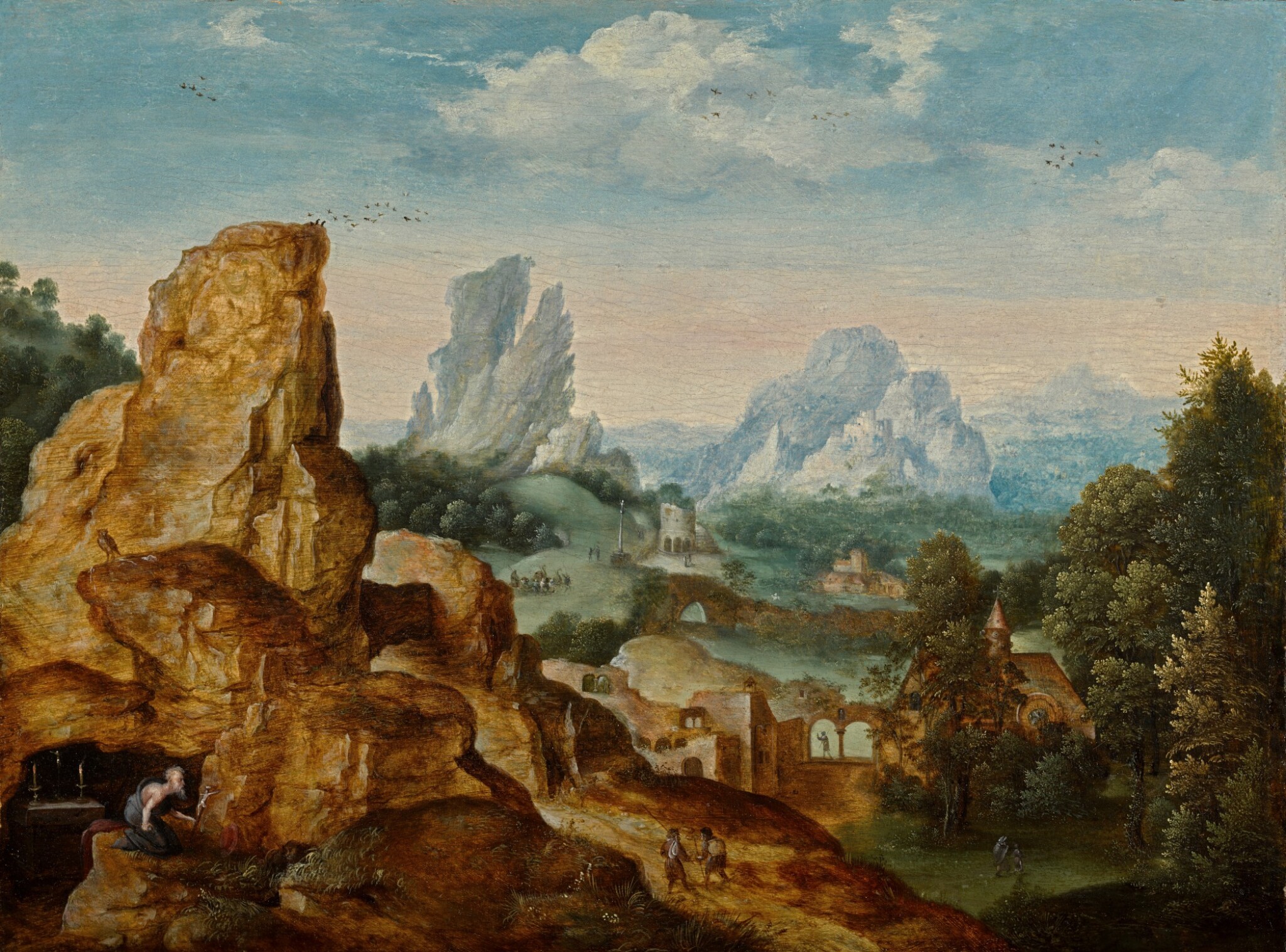
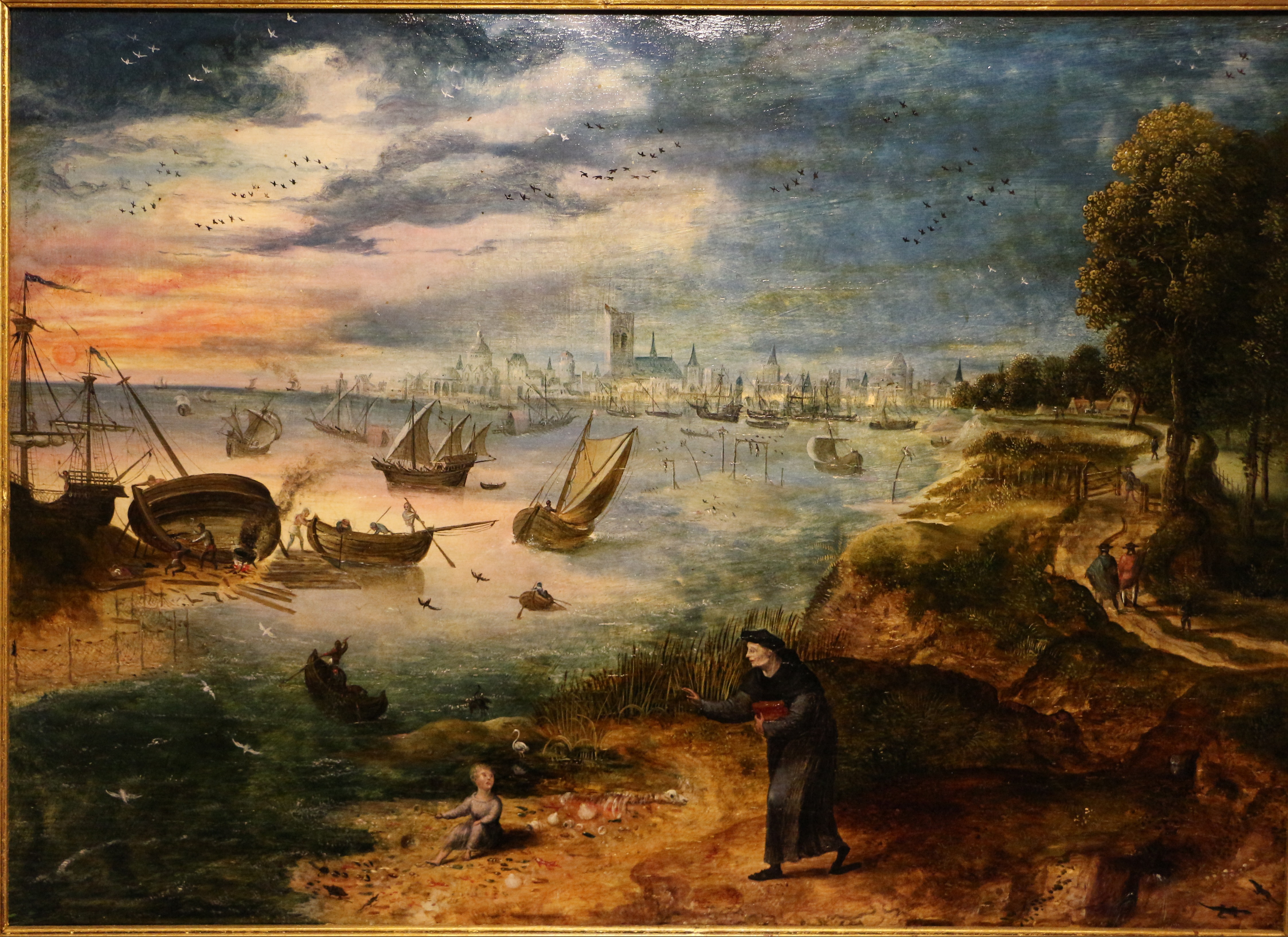
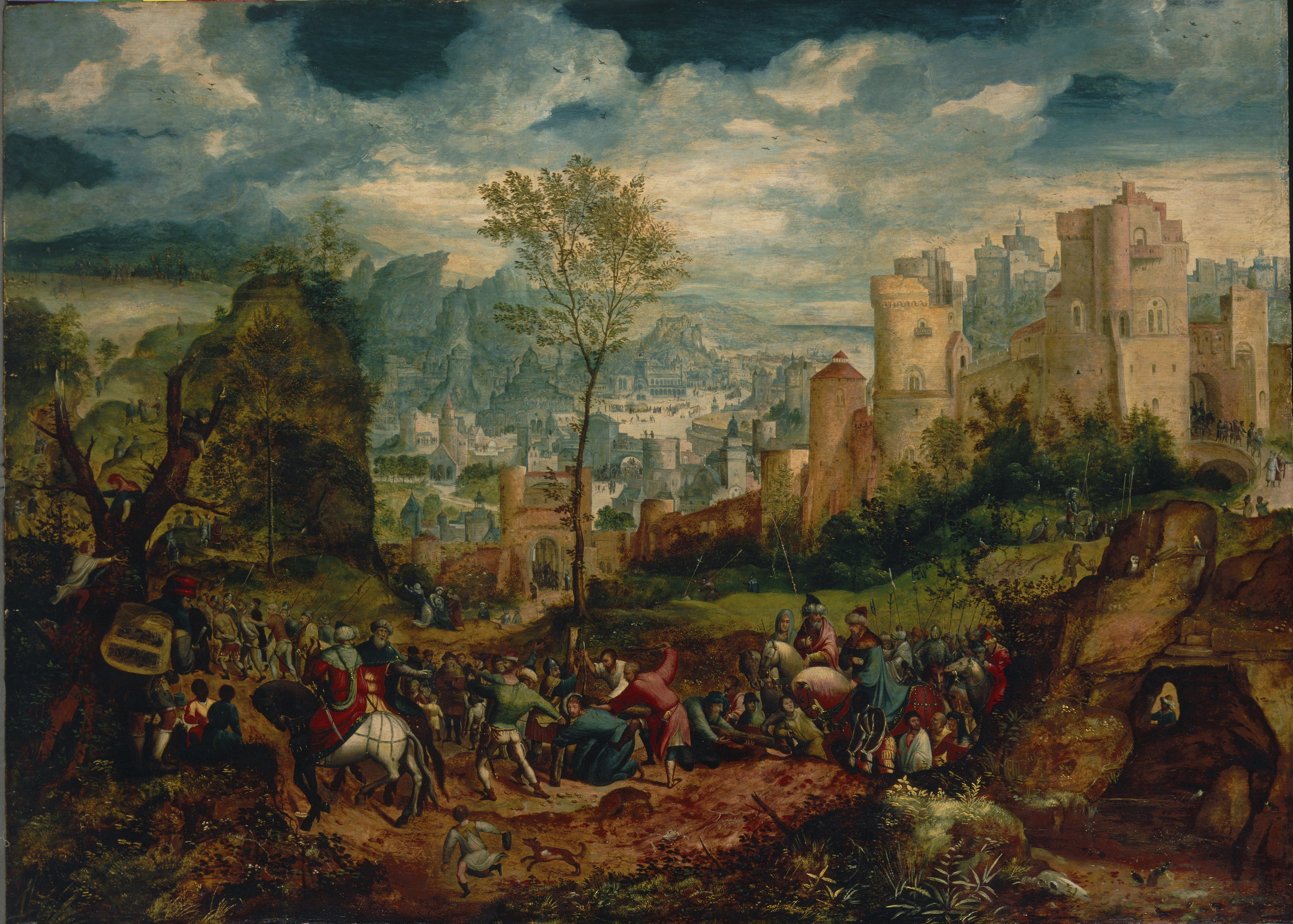
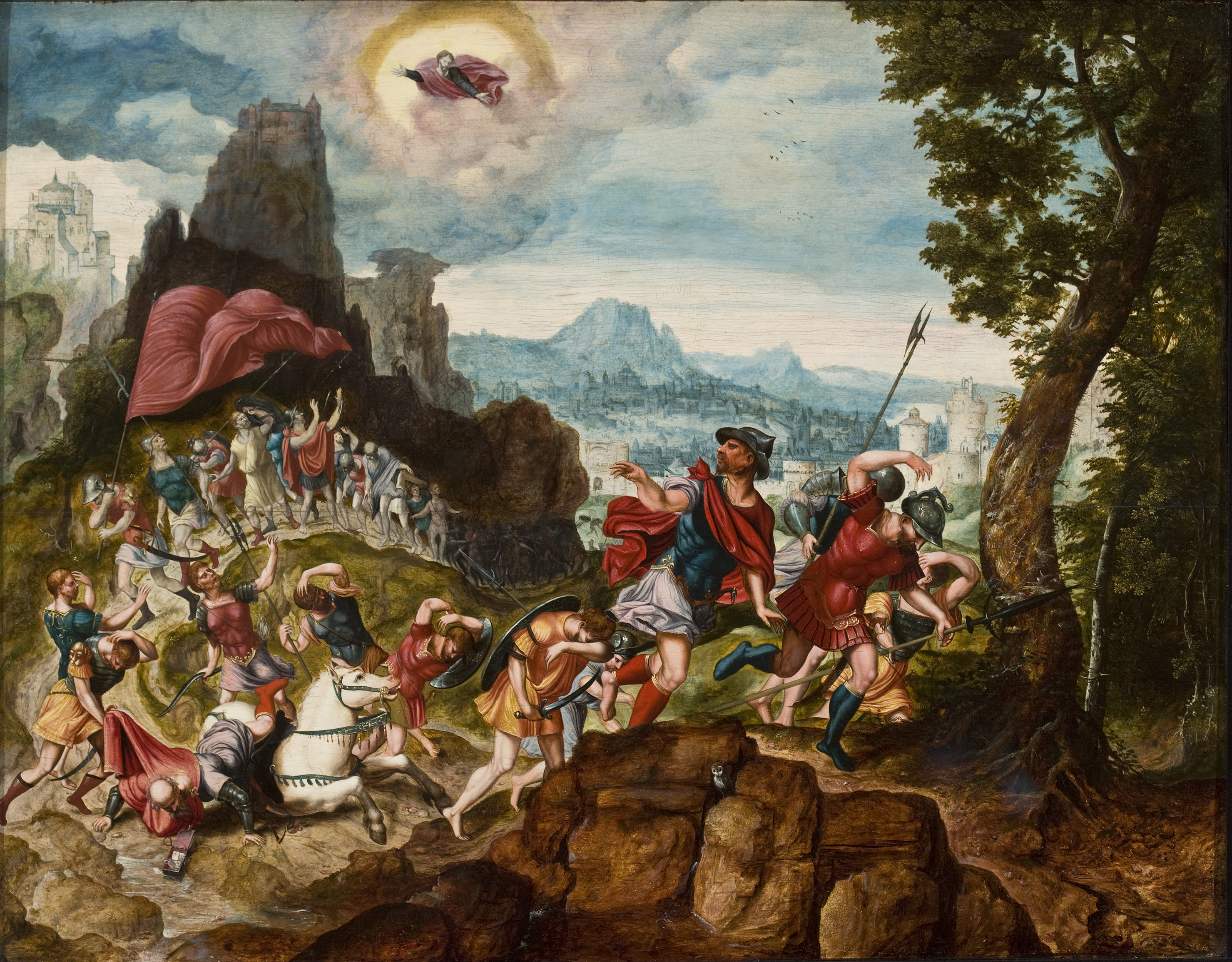
Okay, caveats schmaveats, yadda yadda — are there more owls?
Where's Waldo Owldo
Yes, there are. Most of these are taken from Max Friedländer's Early Netherlandish Painting Vol. 13 (images from Wikimedia) but I supplemented it with other Wikimedia pieces that are attributed to him and have owls. Owlless paintings have been (rightfully) ignored.
17
If you like his pieces but aren't an owl person and take issue with me excluding the strigine-stunted, then perhaps you might like the work of fellow Dinant artist Joachim Patinir or Patenier (maybe no relation, maybe an uncle—there's no good records from 1510). He likewise hid a motif inside many of his pieces, though one slightly more crass than an owl: den kacker. Try and find the shitter in Rest on the Flight into Egypt! 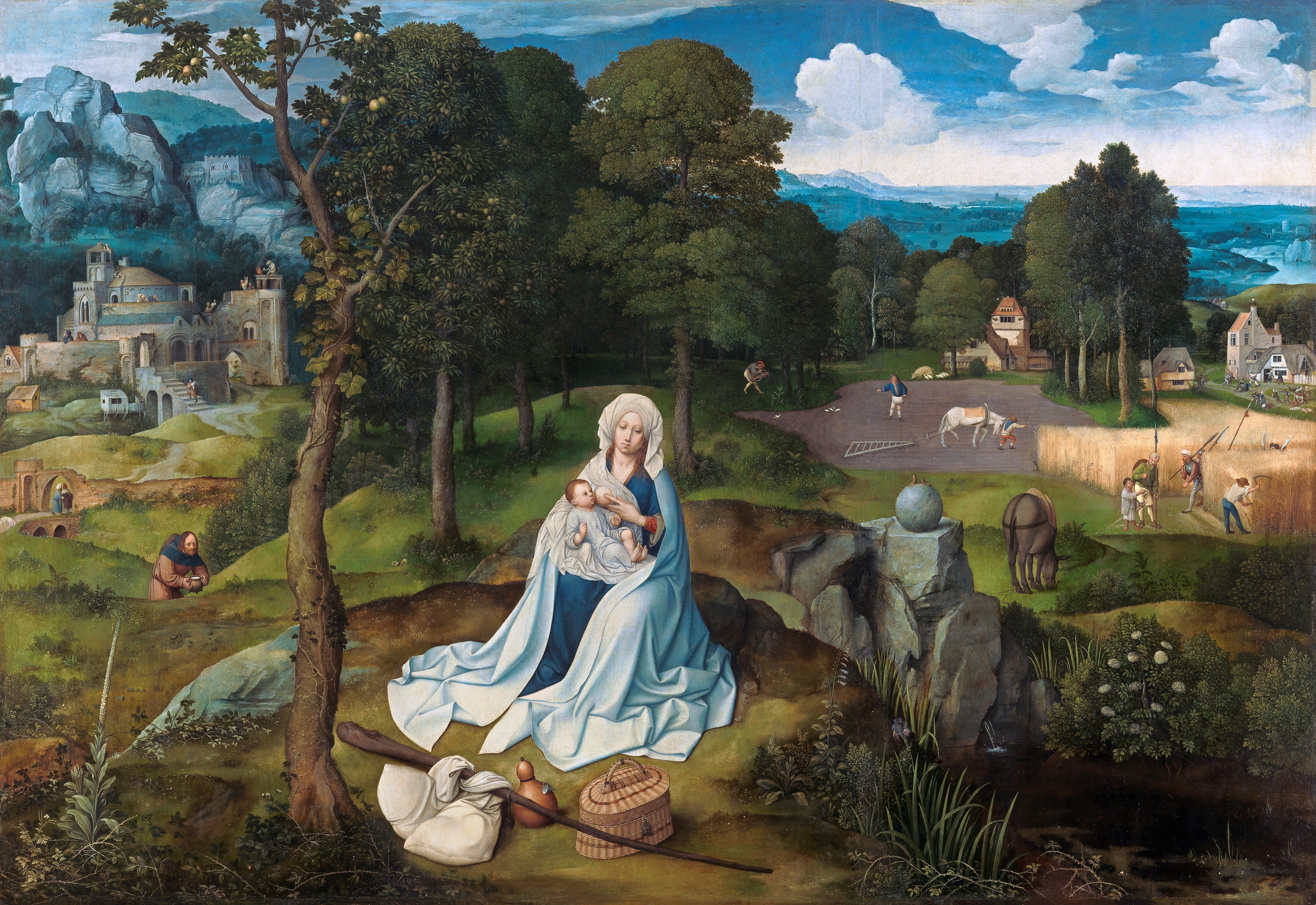 Click to see the answer.
More? How about Landscape with Charon Crossing the Styx? 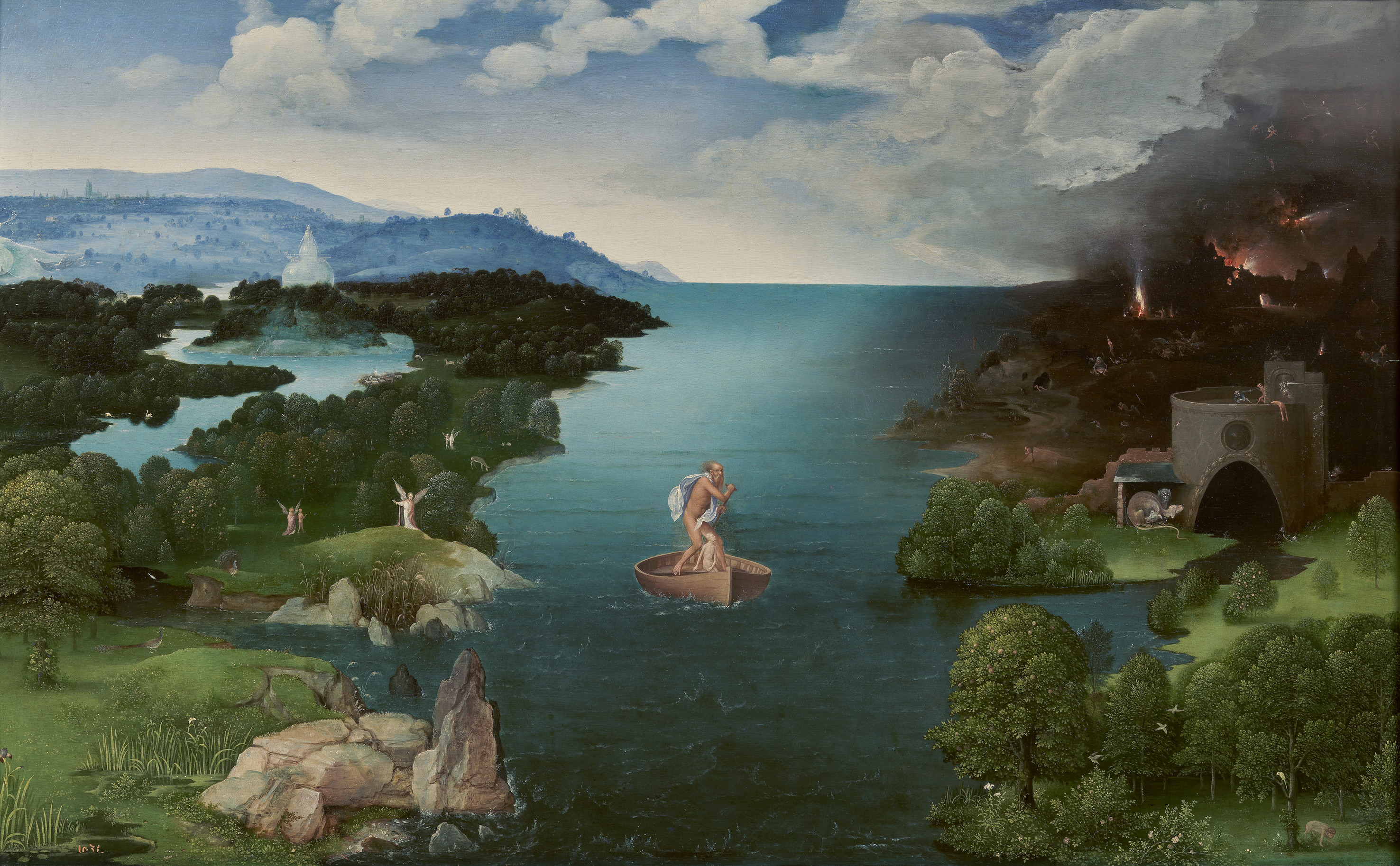
Unfortunately there's only three and the third doesn't have a scan in sufficient resolution to make him out. I need to make a trip out to Madrid.
Let's start easy. Good luck!
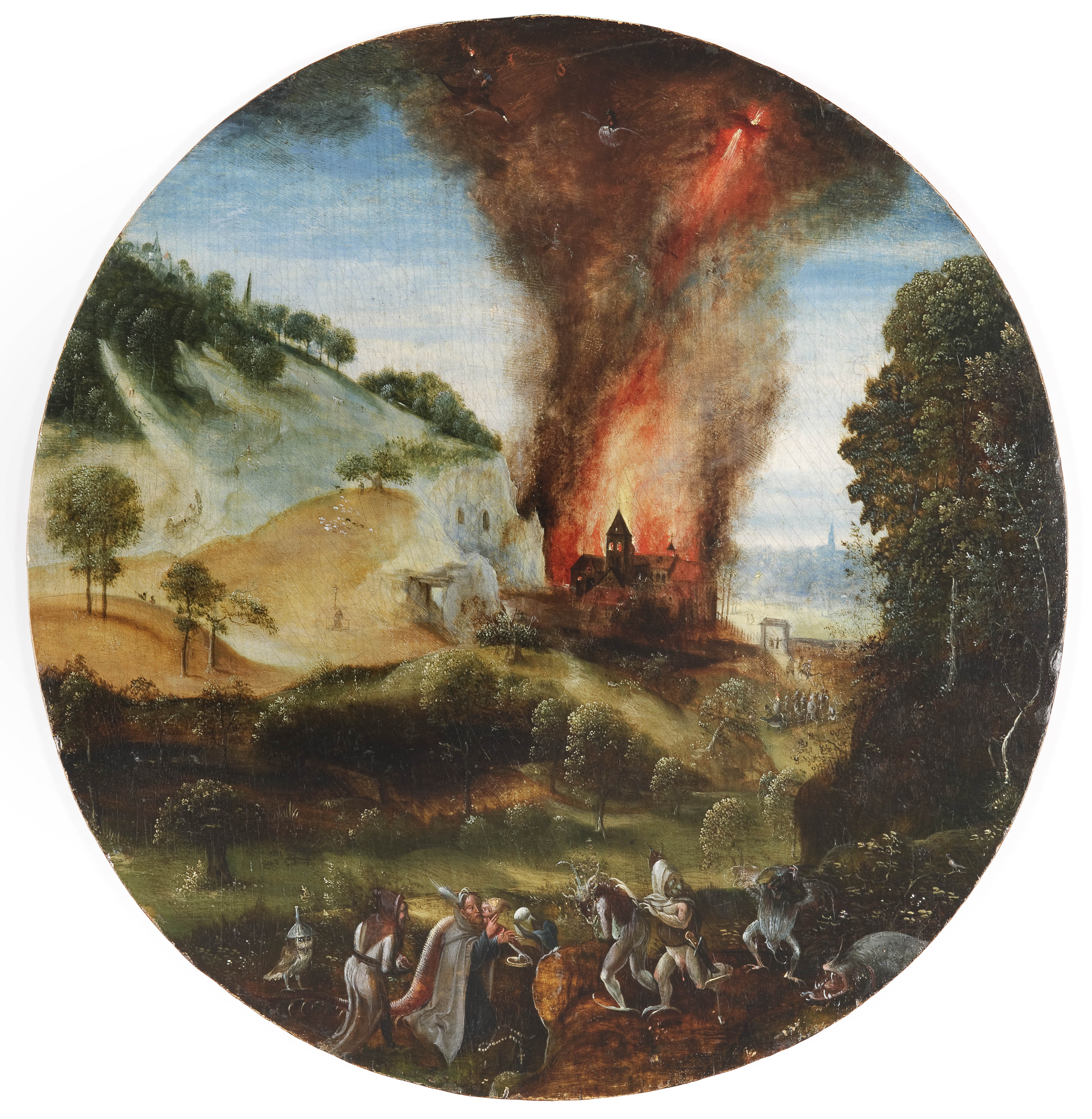
(Original source)
Okay, maybe not trivial. Maybe the easier ones are when the owls are where you would expect an owl to be.
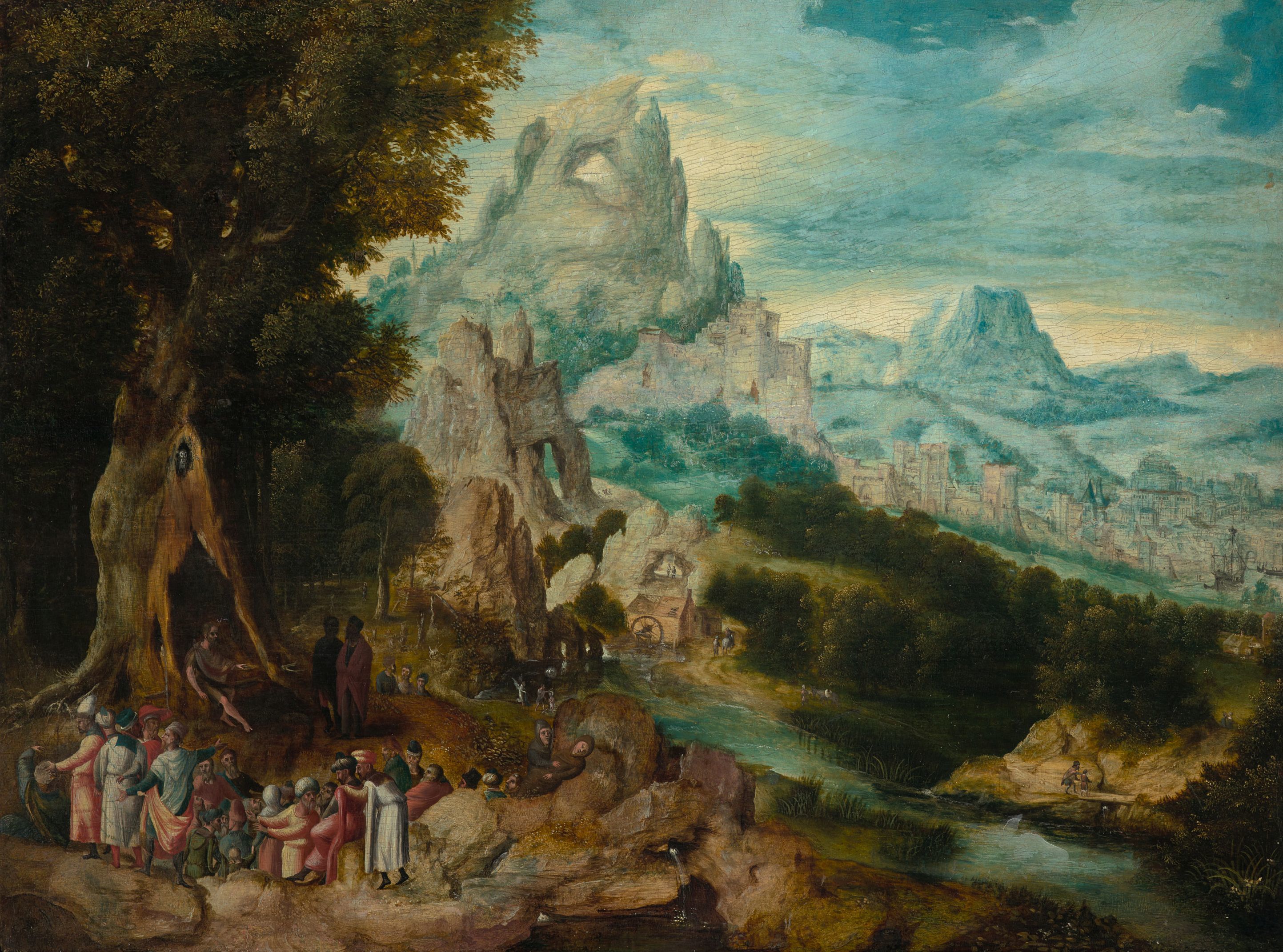
(Original source)
Landscape with St. John the Baptist Preaching
Met de Bles painted many versions of the same thing, which unfortunately end up with similar names: St. John the Baptist preaching was a common one. Sometimes this leads to the owl being placed in a similar spot.
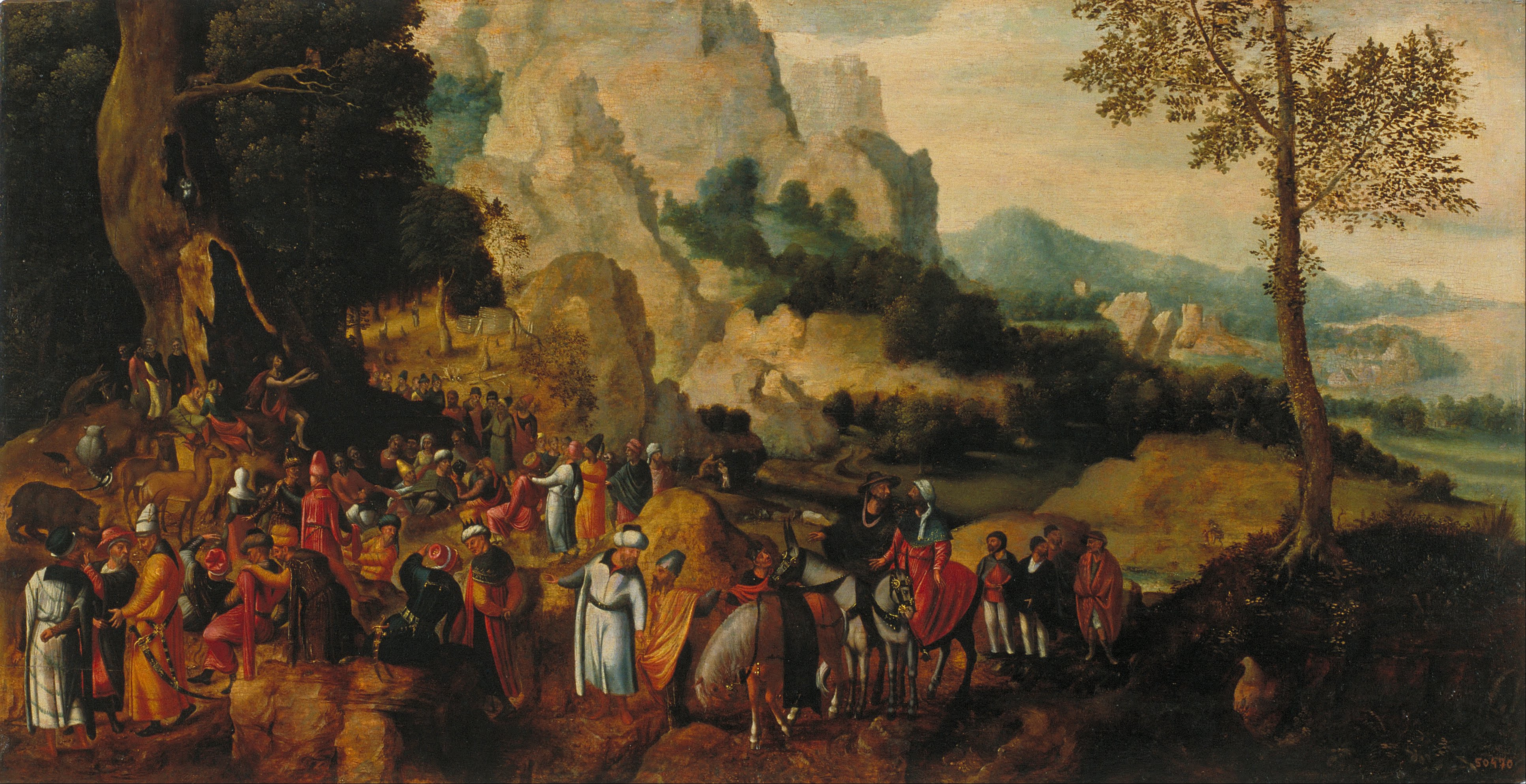
(Original source)
But often it can bounce around!
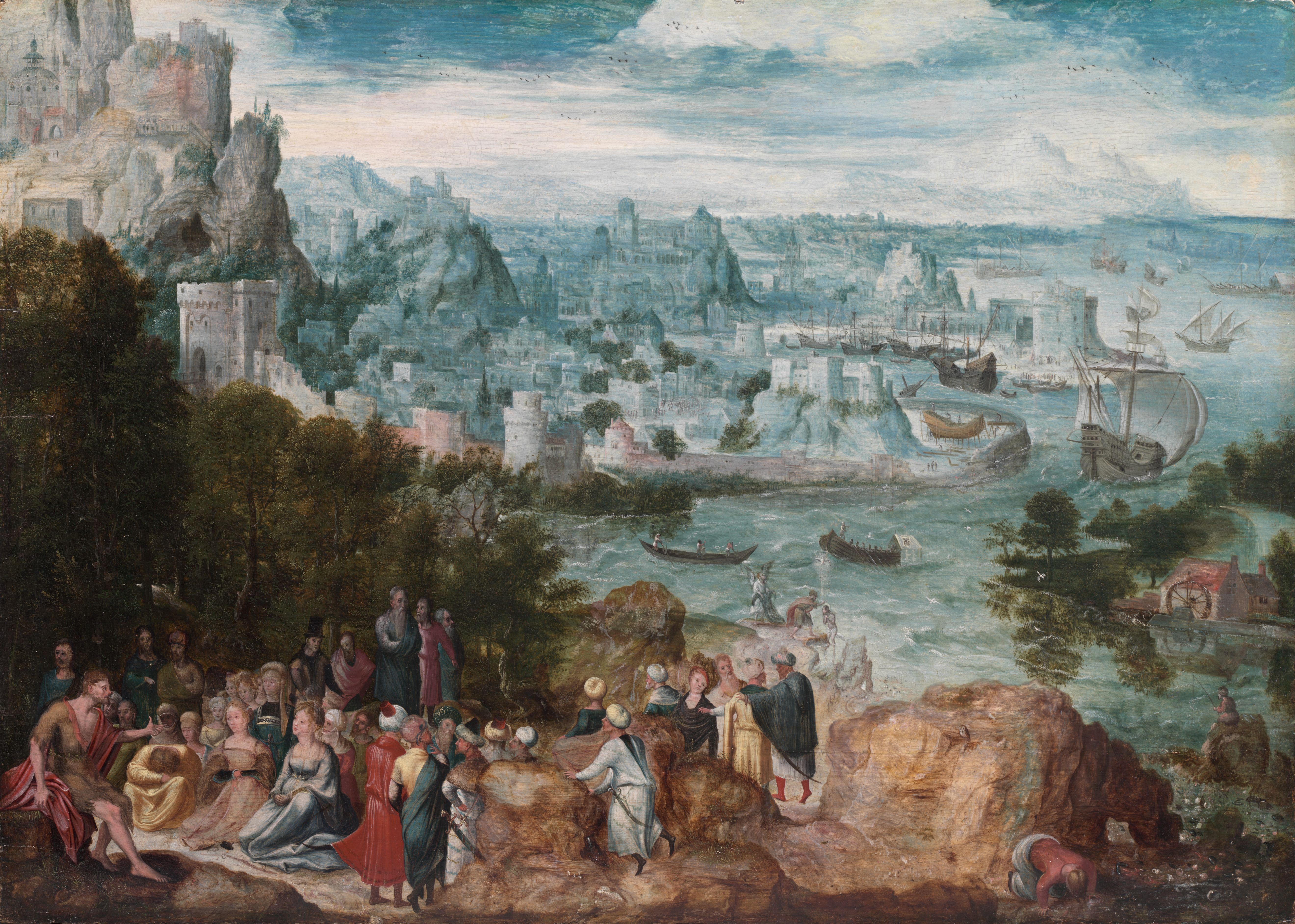
(Original source)
Some pieces are only really 'named' by auction houses, leading to more colloquial naming structures:
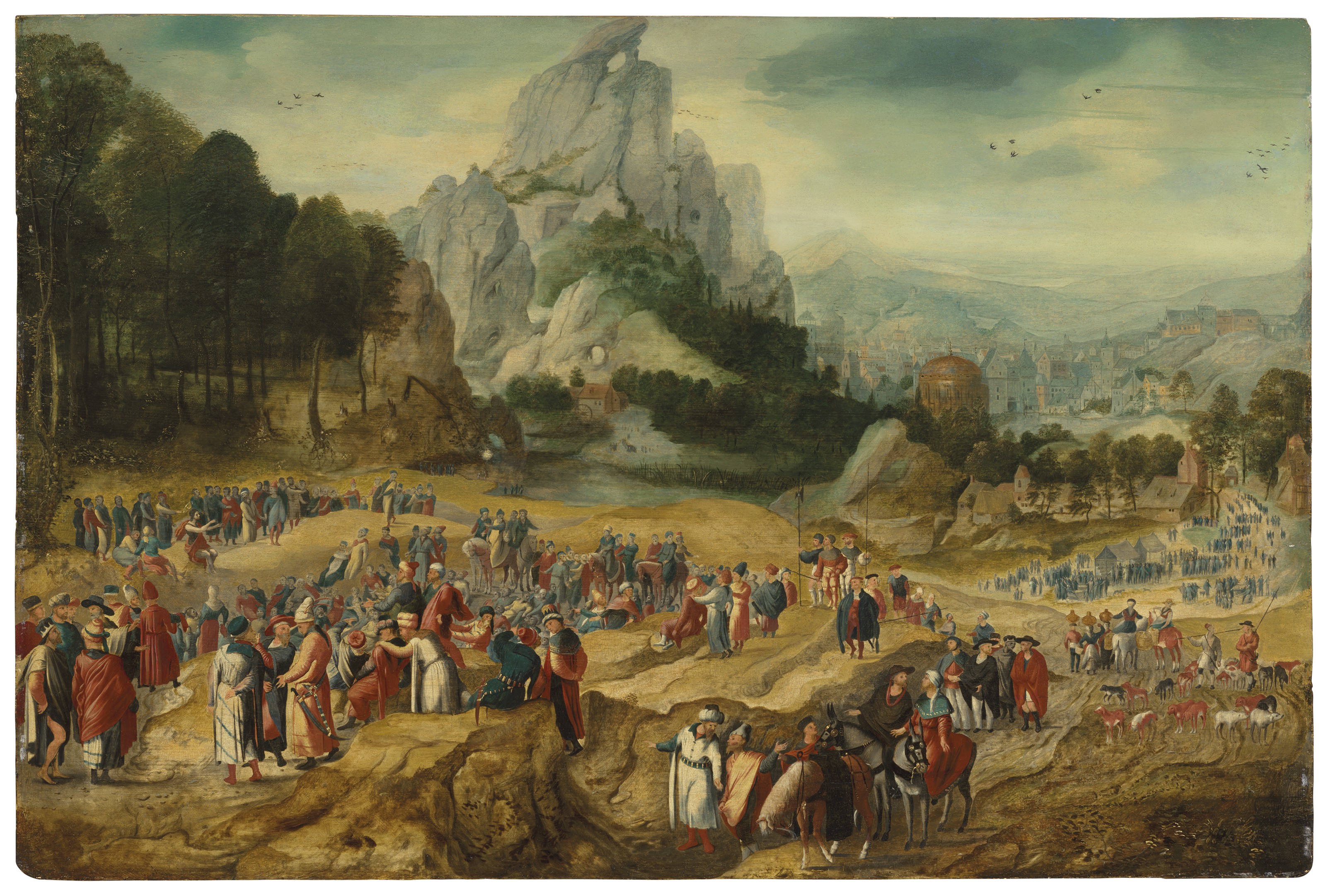
(Original source)
And some of these pieces are almost like composites of multiple previous pieces.
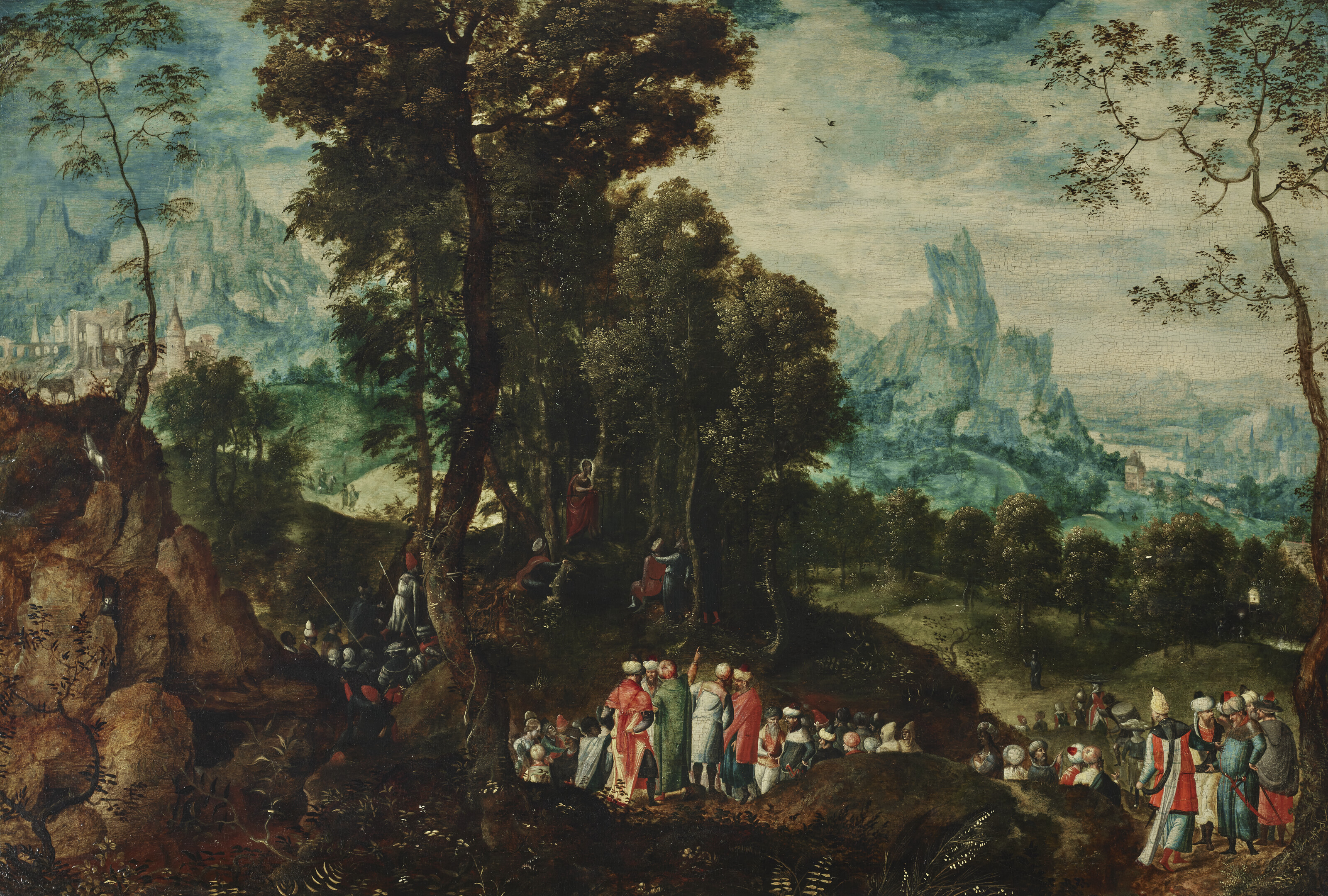
(Original source)
Personally though, this is my favorite of the set: I like the composition, and I'm a sucker for a good cliff.
18
Also, the Flemish depictions of God are very Merlin-coded, which is fun. 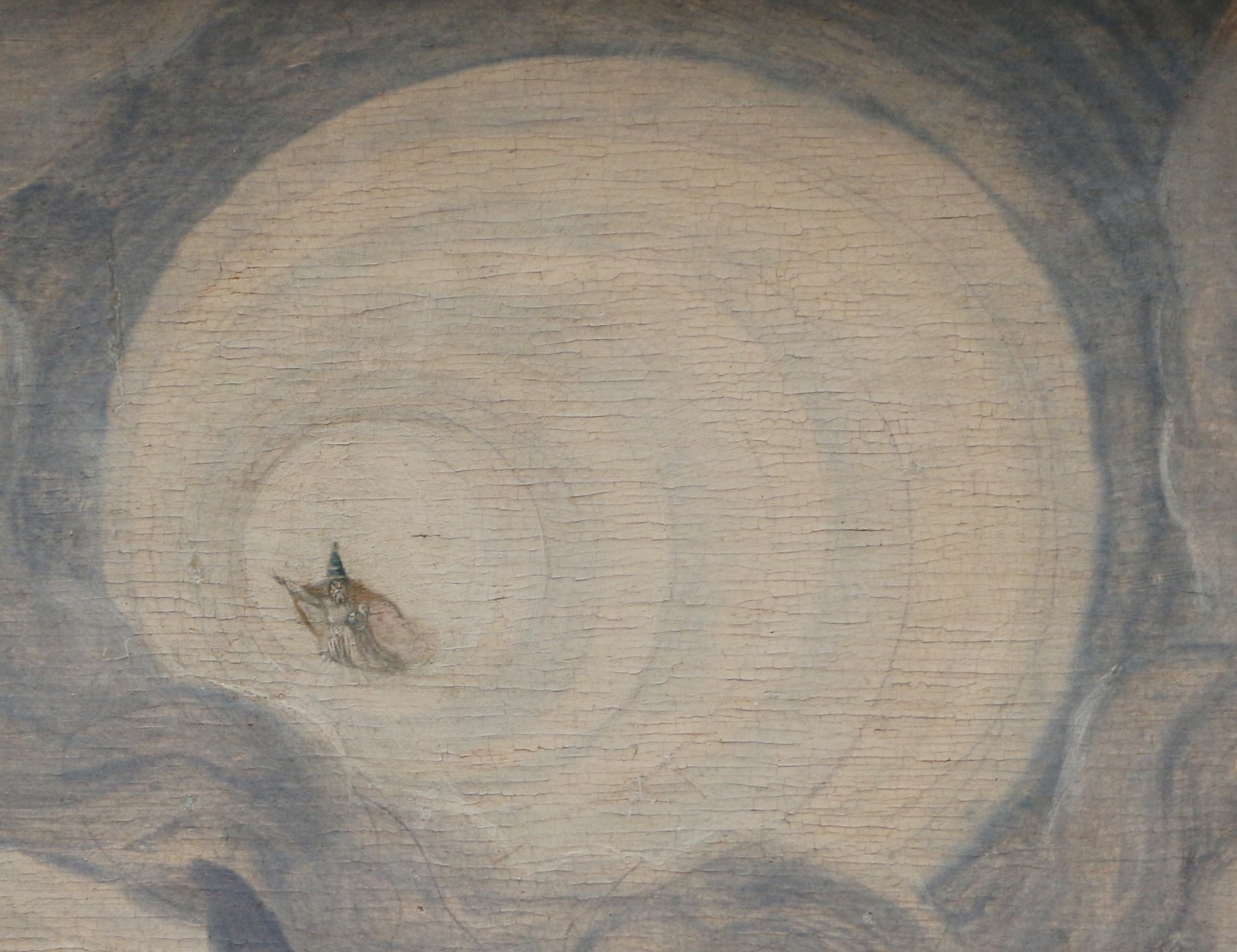 Plus it's a challenging owl.
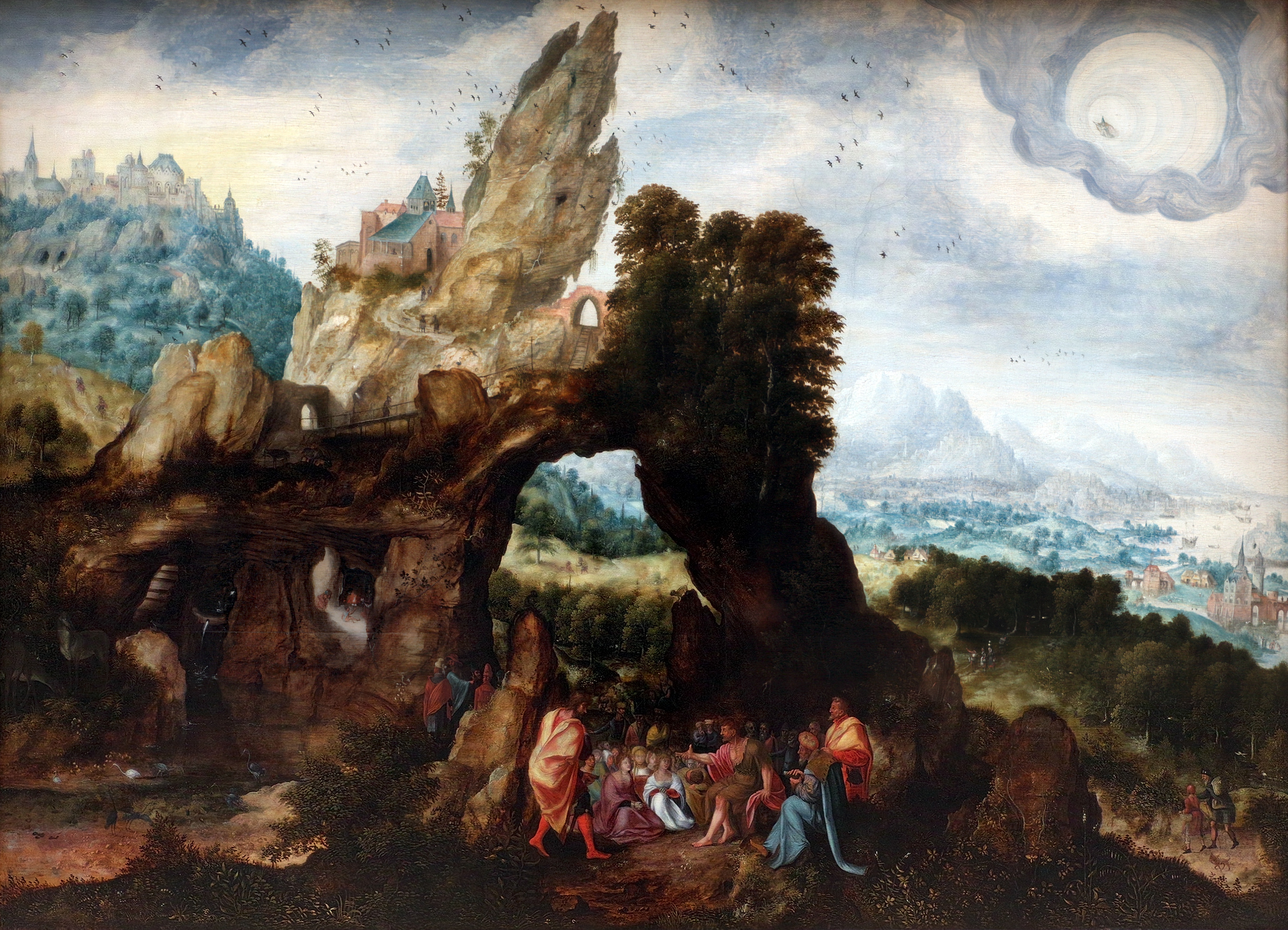
(Multiple sources 19 )
Other biblical scenes
There was a lot of demand for religious works at the time, so it's no surprise that so many of met de Bles' works are biblical. Despite this there's a lot of visual variety.
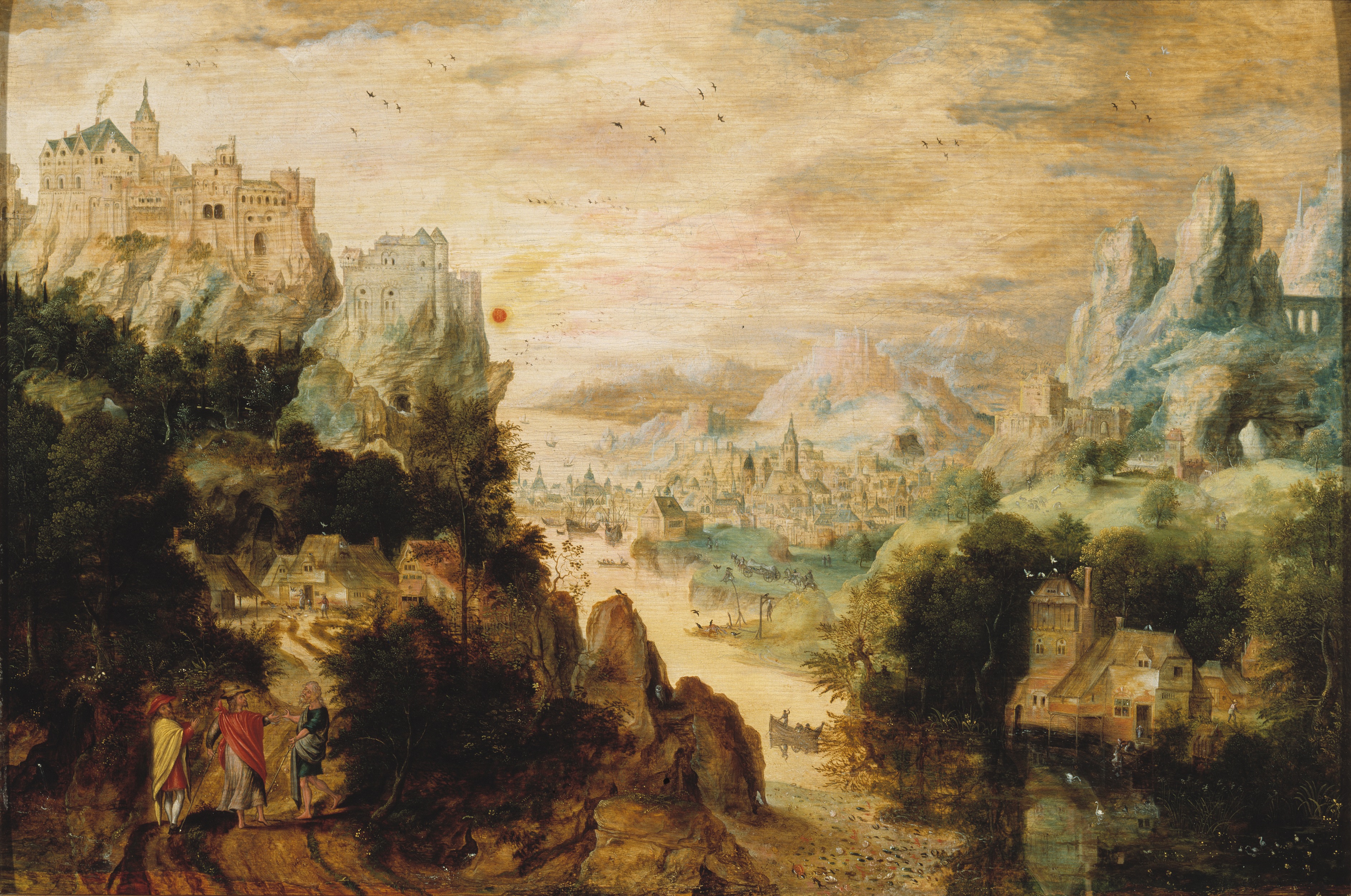
(Original source)
(Original source)
(Original source)
(Original source)
(Original source)
Sometimes the owl has different coloration.
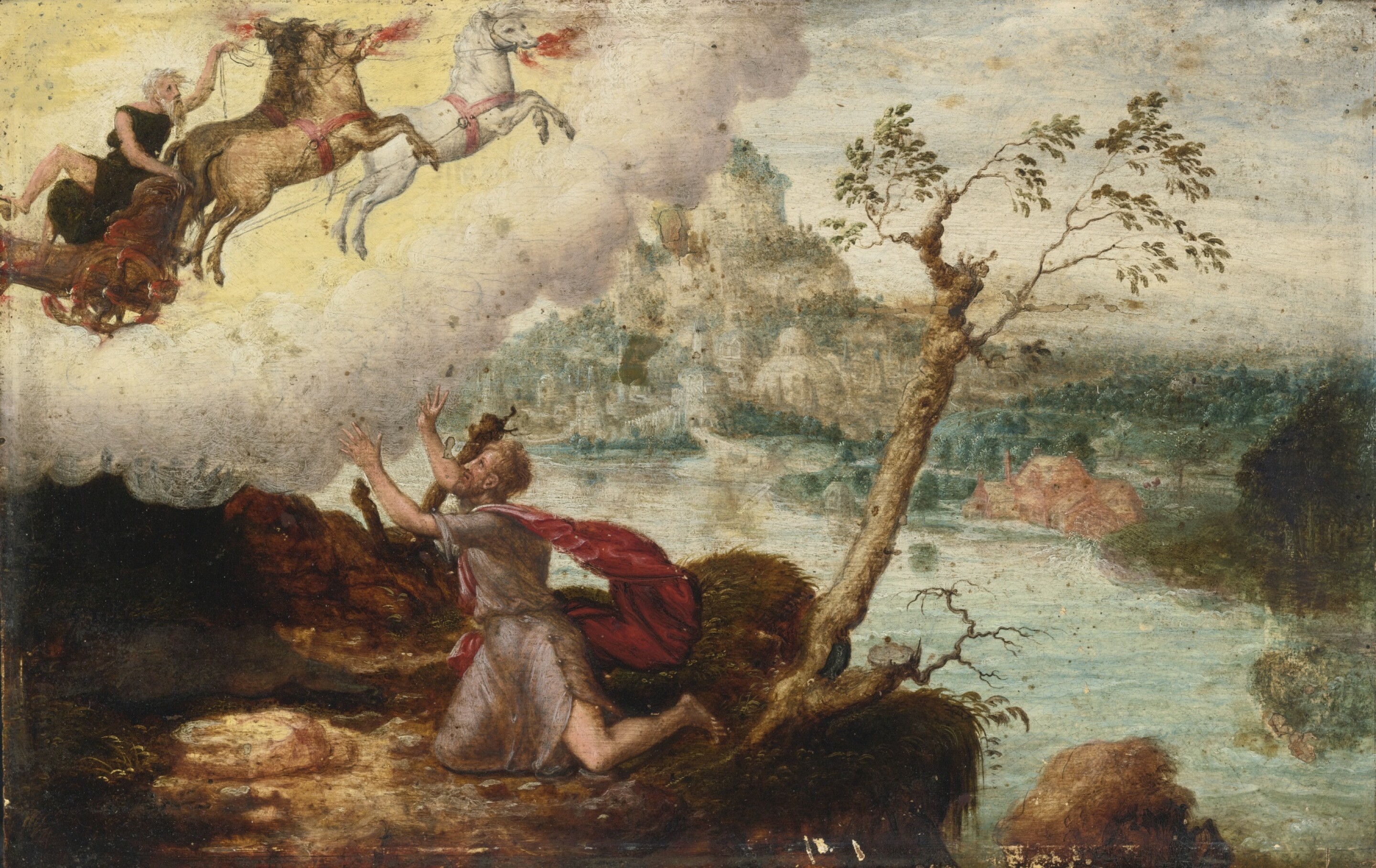
(Original source)
And sometimes the whole piece does, like when I couldn't find a colorized version of Jonah and the Whale.
21
Old whale illustrations are so funny, because no one was seeing them in person. 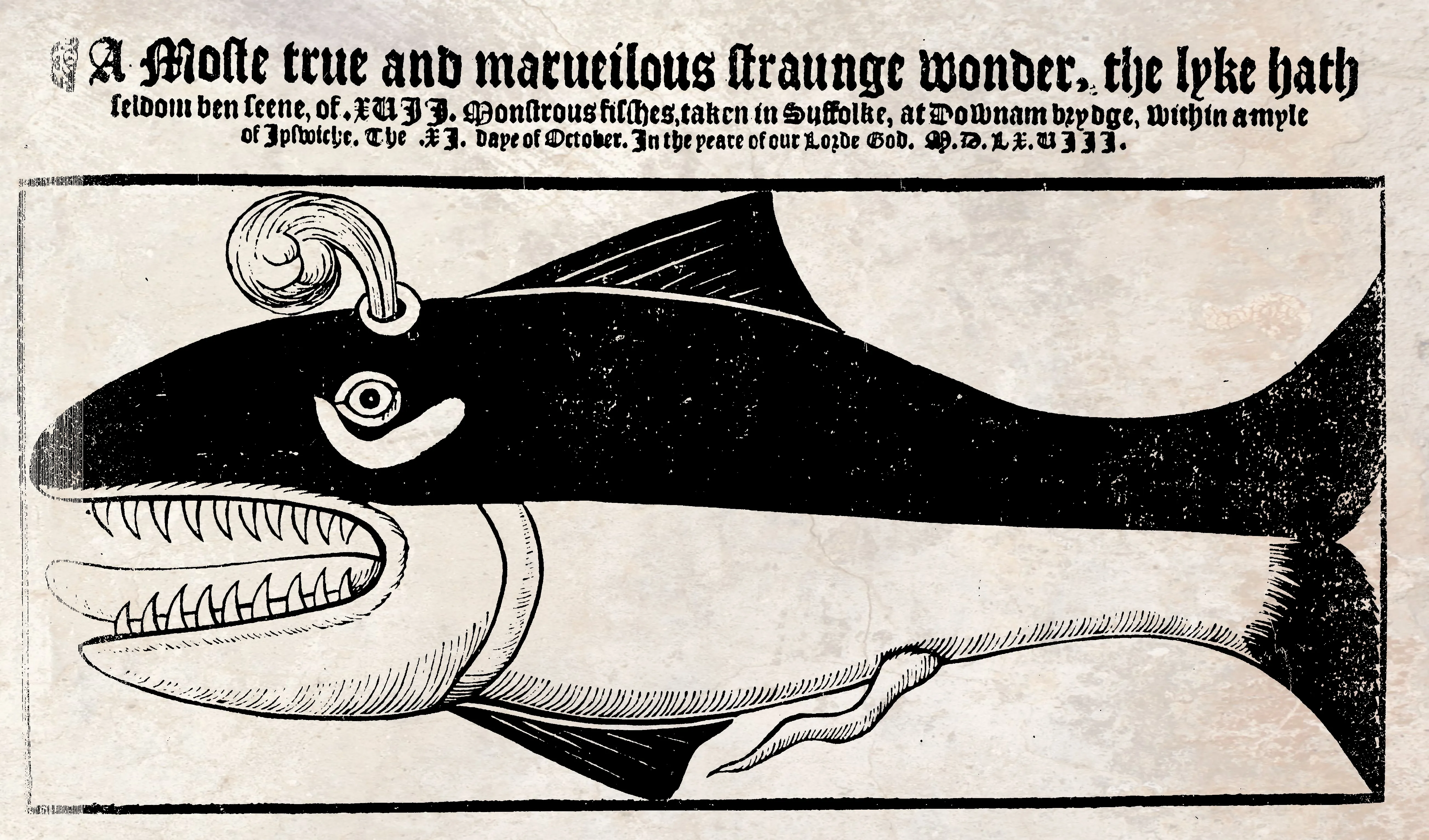
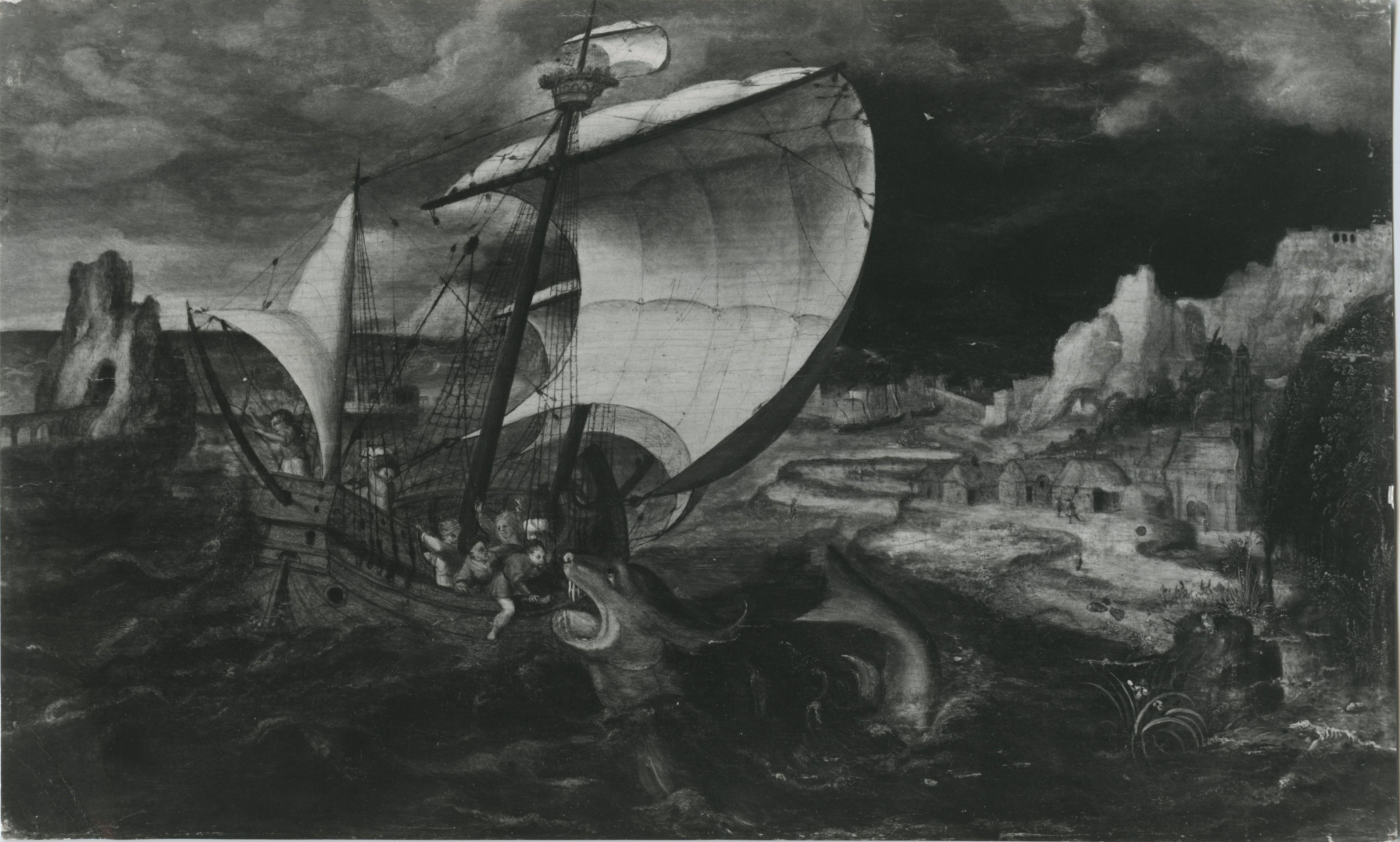
(Original source)
There are still some pieces on the same topic, like Saint John on Patmos.
22
I love what he does with shells: something about them feels so magical. I think it scratches some latent childhood desire to open an I Spy book. 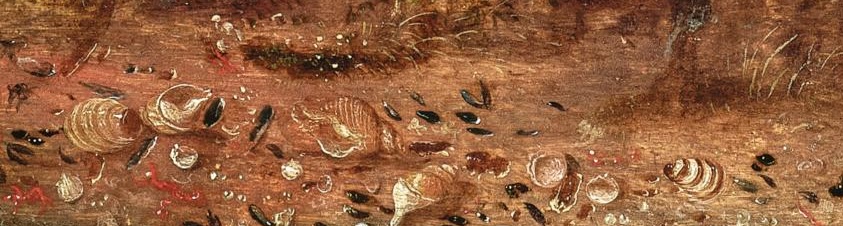
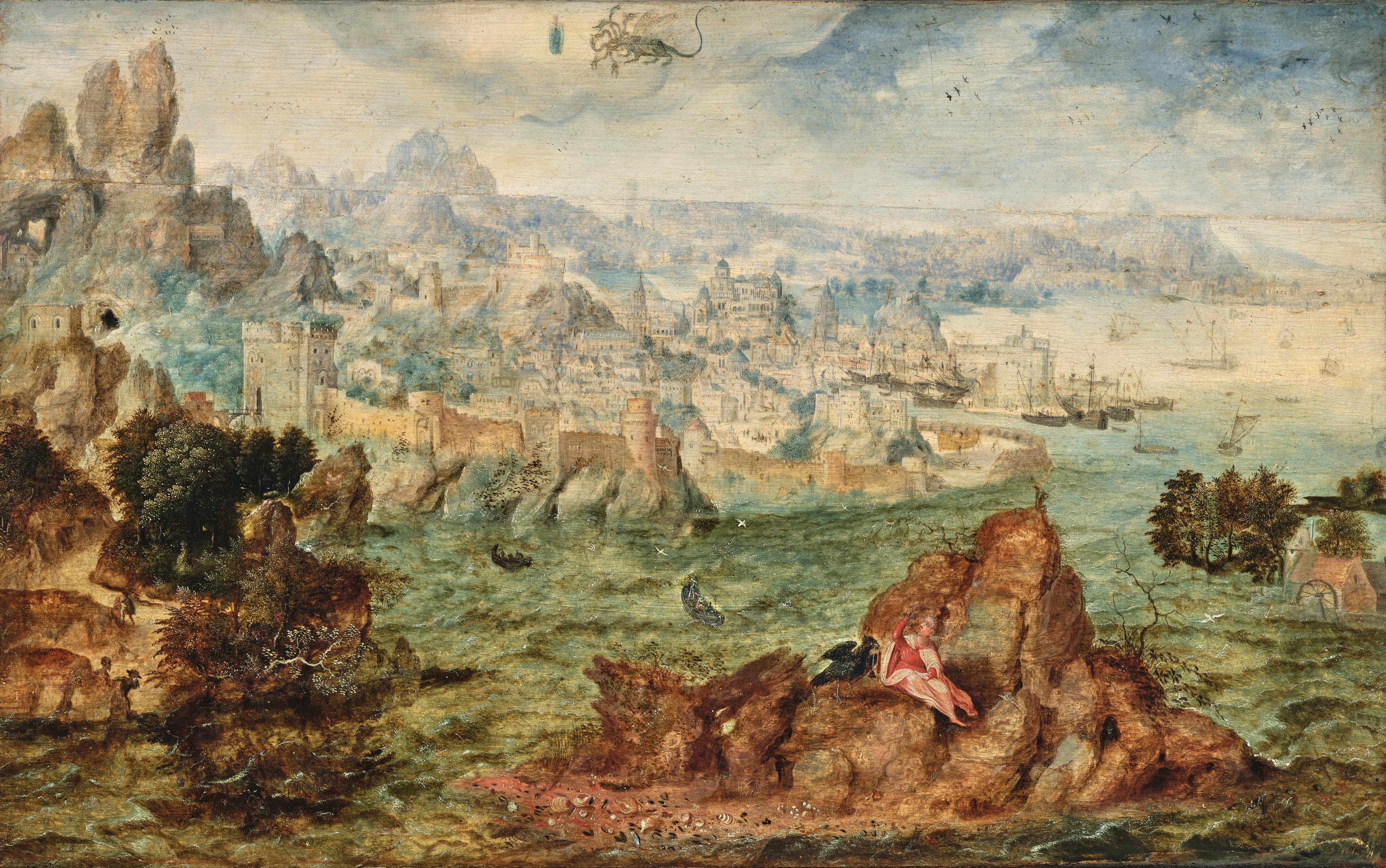
(Original source)
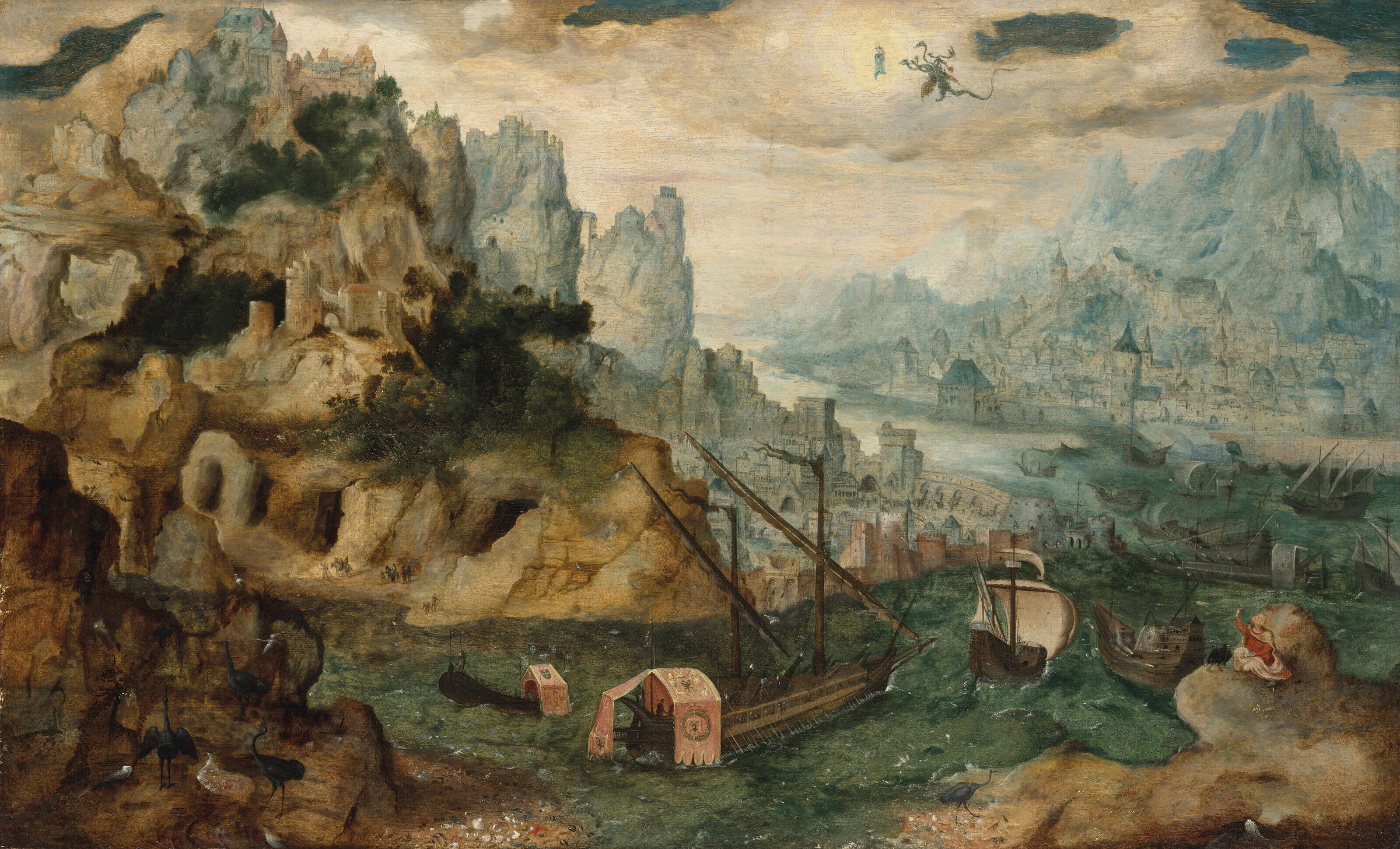
(Original source)
Or the flight into Egypt.
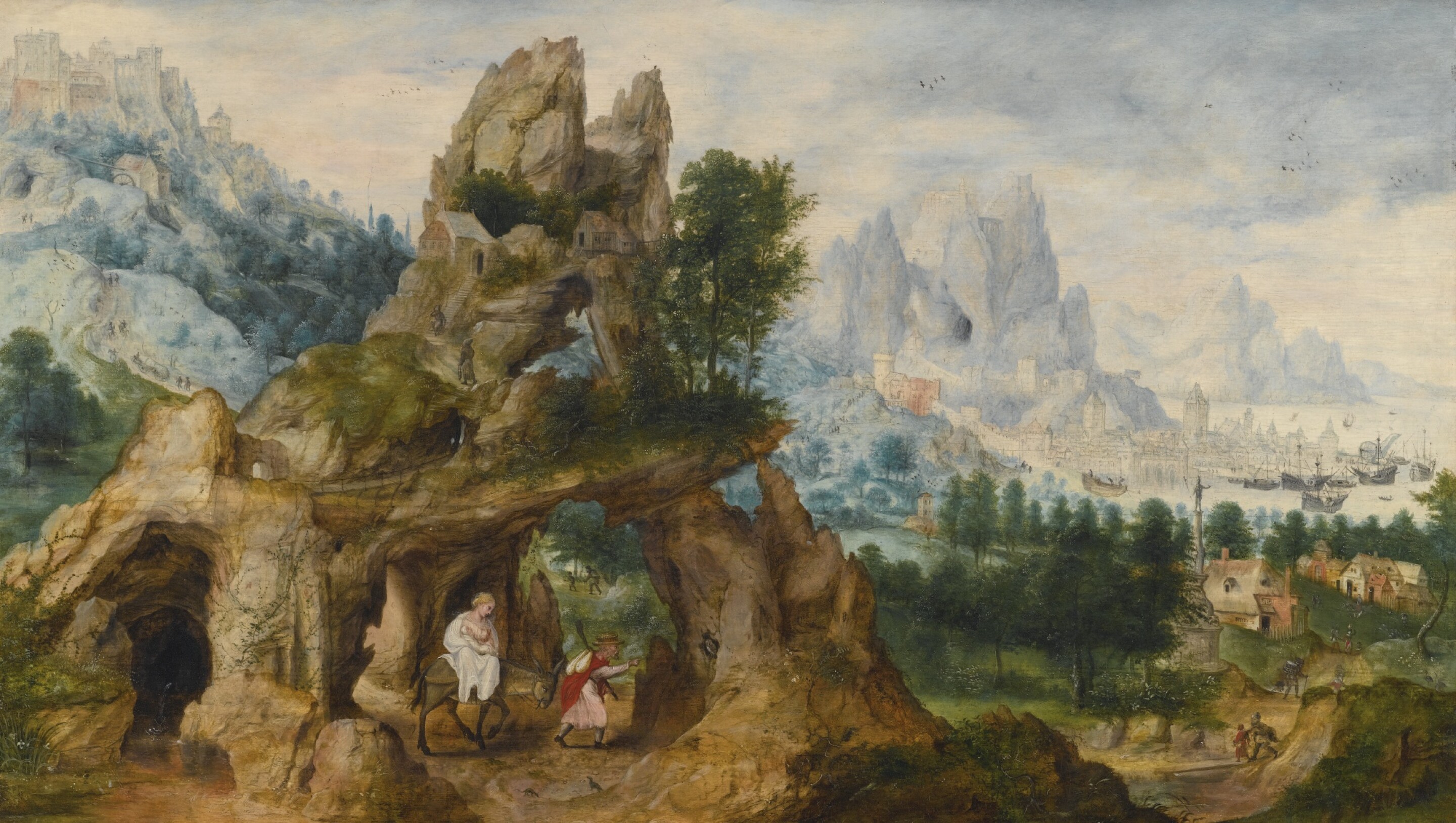
(Original source)
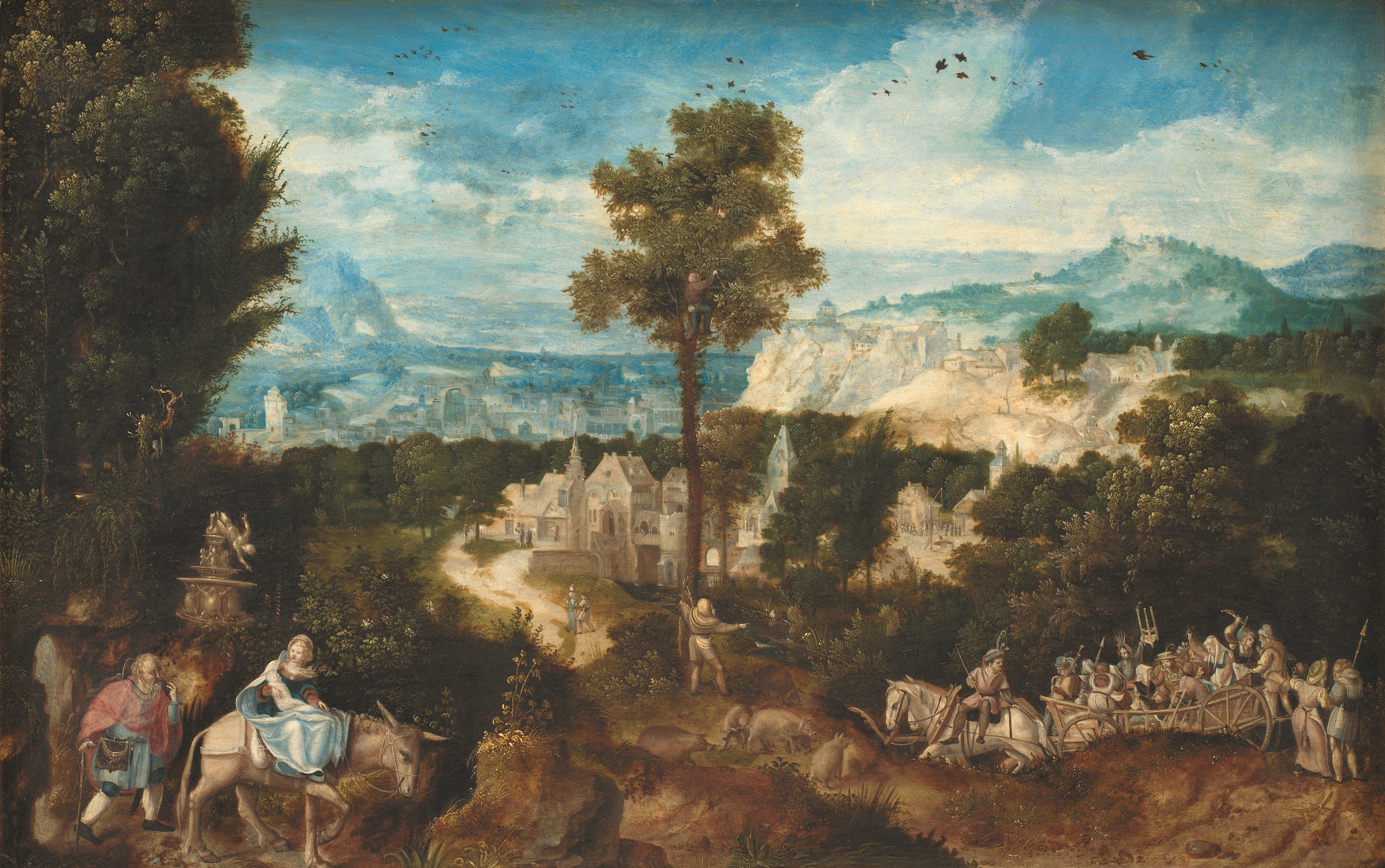
(Original source)
And sometimes the images that come from auctions make it hard to be 100% confident at the quality level we have (so don't feel bad if you don't get these two). Gorgeous paintings though.
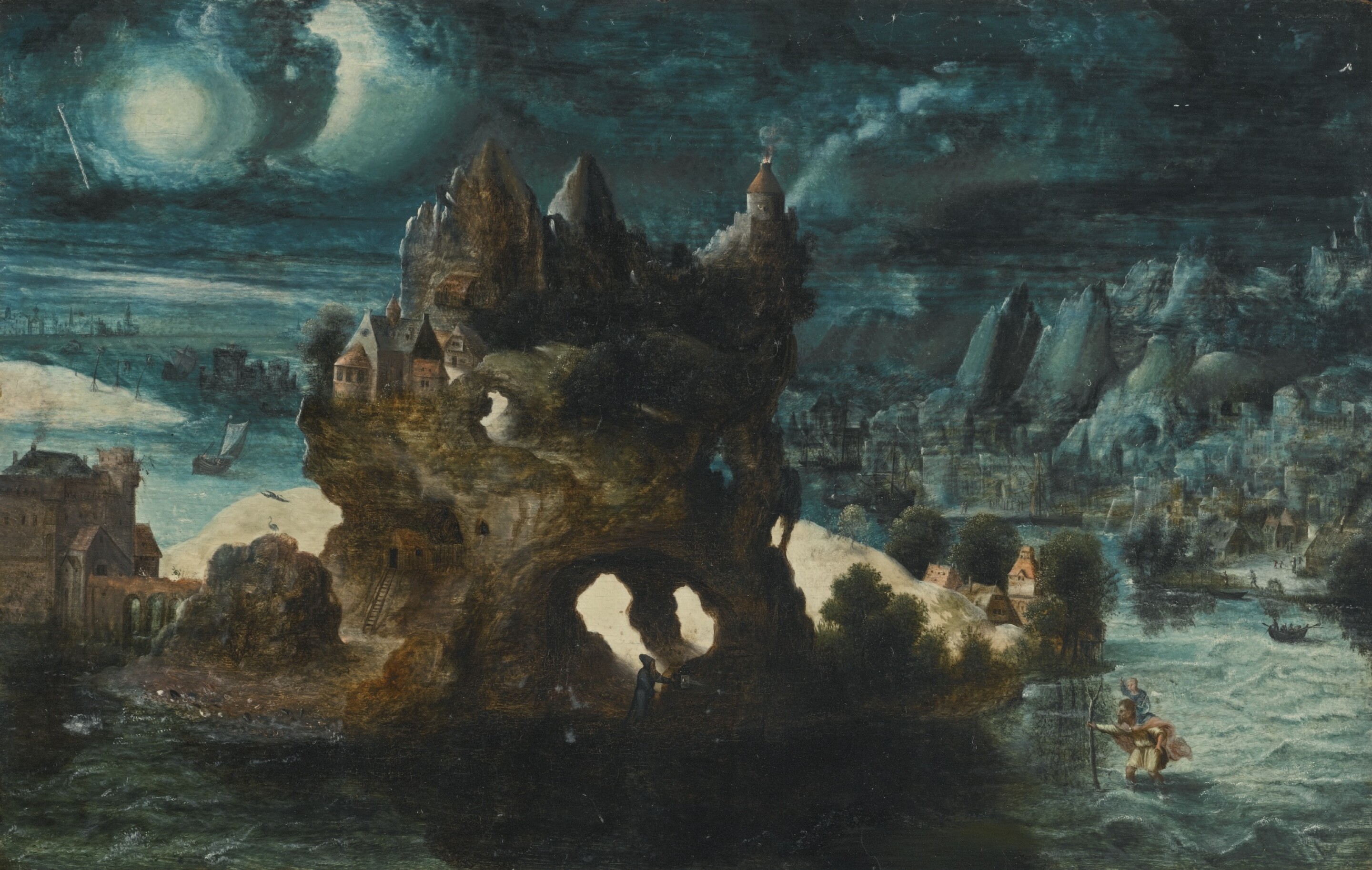
(Original source)
The eagle worked into the cliff makes this one of my favorites (potentially as a nod to St. John the Evangelist). It feels like something out of The Water Hole by Graeme Base.
23
Here's the eagle from that.  Fantastic kids' book, and yet doesn't hold a candle to The Eleventh Hour.
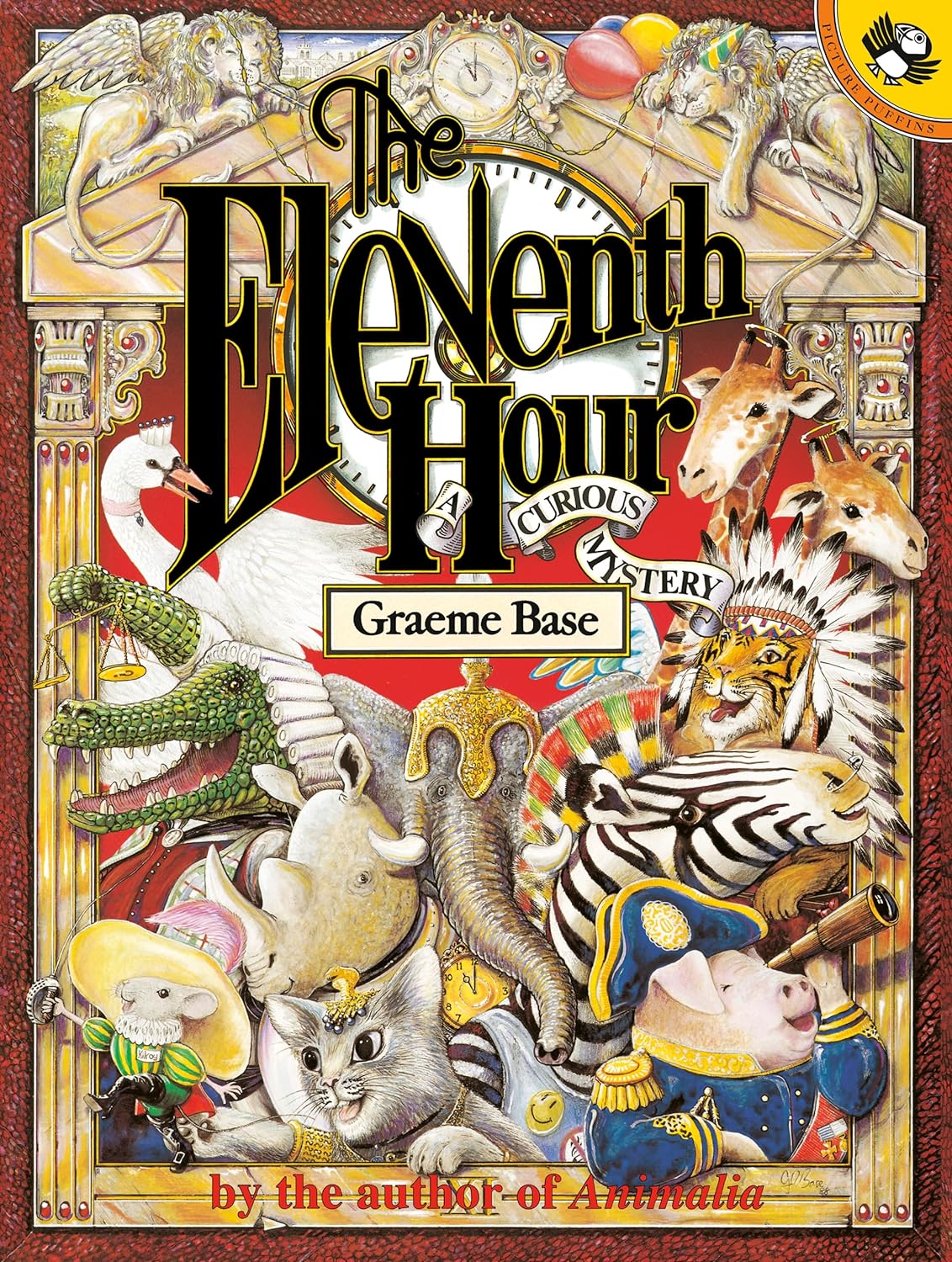
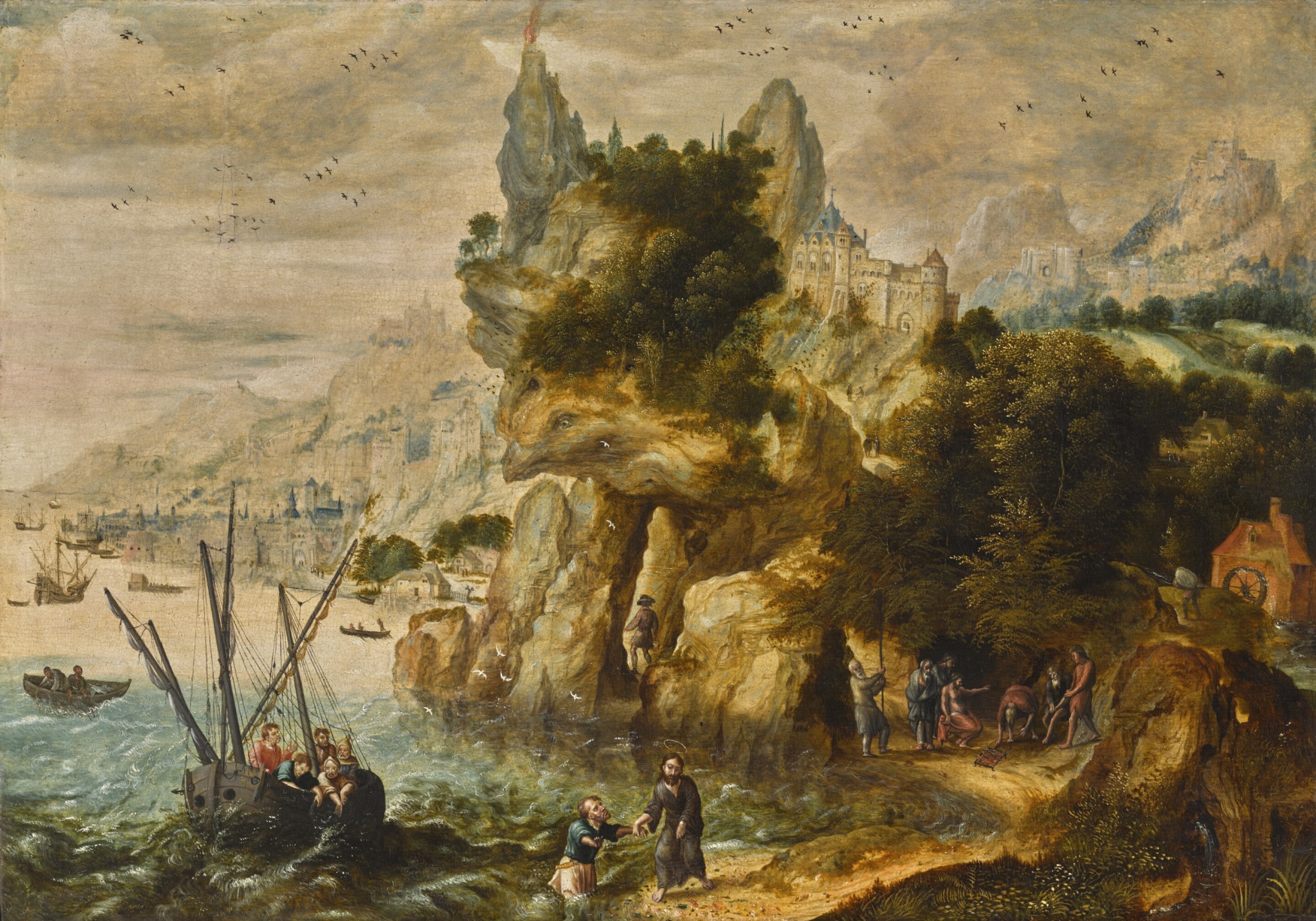
(Original source)
And finally we're back to fire!
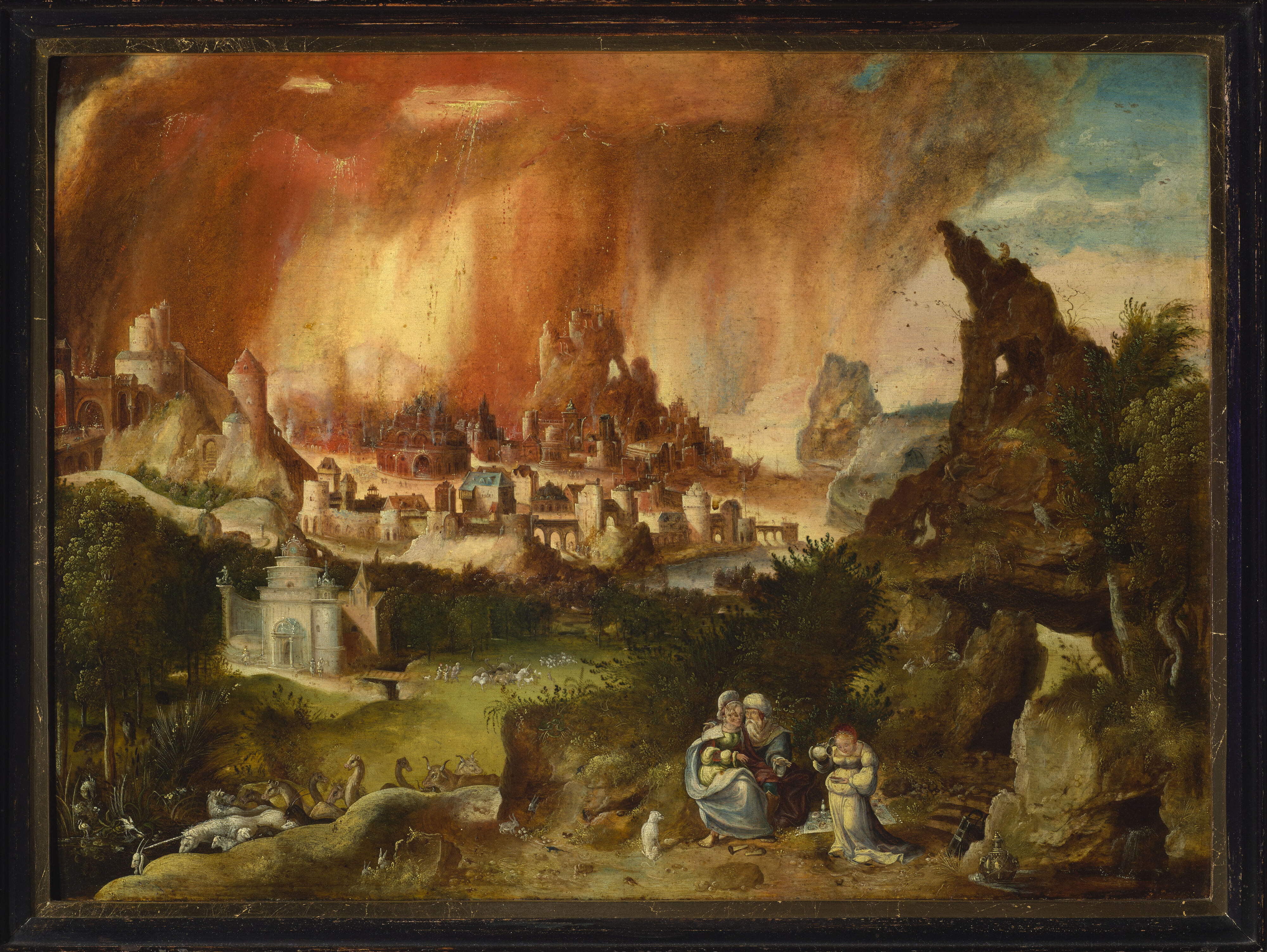
(Original source)
That's a good segue to the Hieronymus Bosch imitations.
25
Fun fact, Hieronymus' actual name is Jheronimus van Aken. Bosch just means 'forest' and comes from being born in ’s-Hertogenbosch. A town name starting with 's- is quintessentially human: efficiently dropping the 'des' syllable but keeping it in the spelling because of course it's spelled that way, it's always been spelled that way.
Bosch died in 1516, leaving a gap in the market for 'Boschian' paintings. Met de Bles stepped into this, doing a few of his own (though keeping other aspects of his own style, along with the owl).
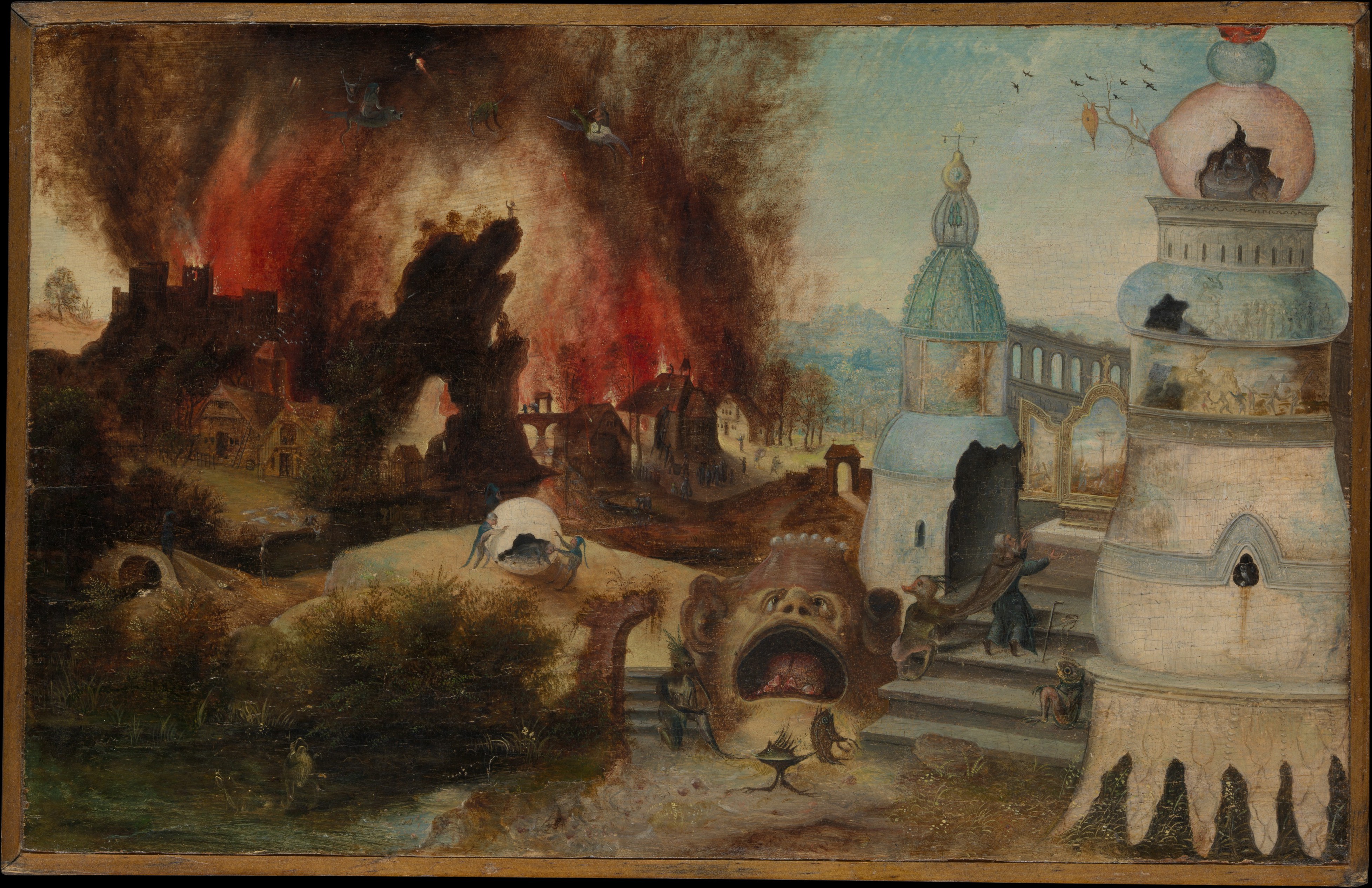
(Original source)
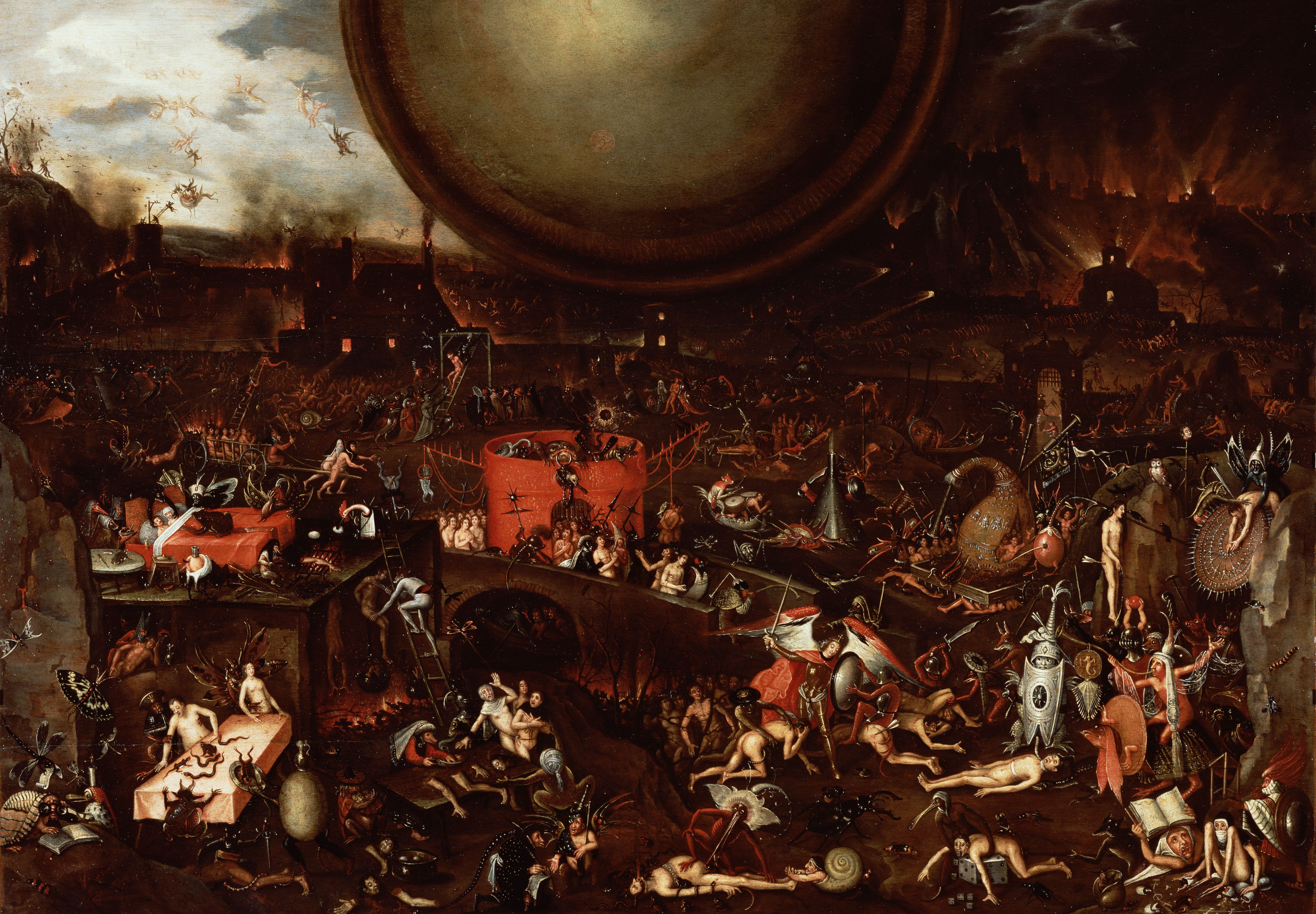
(Original source)
Nature
But enough of hell and the Bible. Let's end with some simple nature!
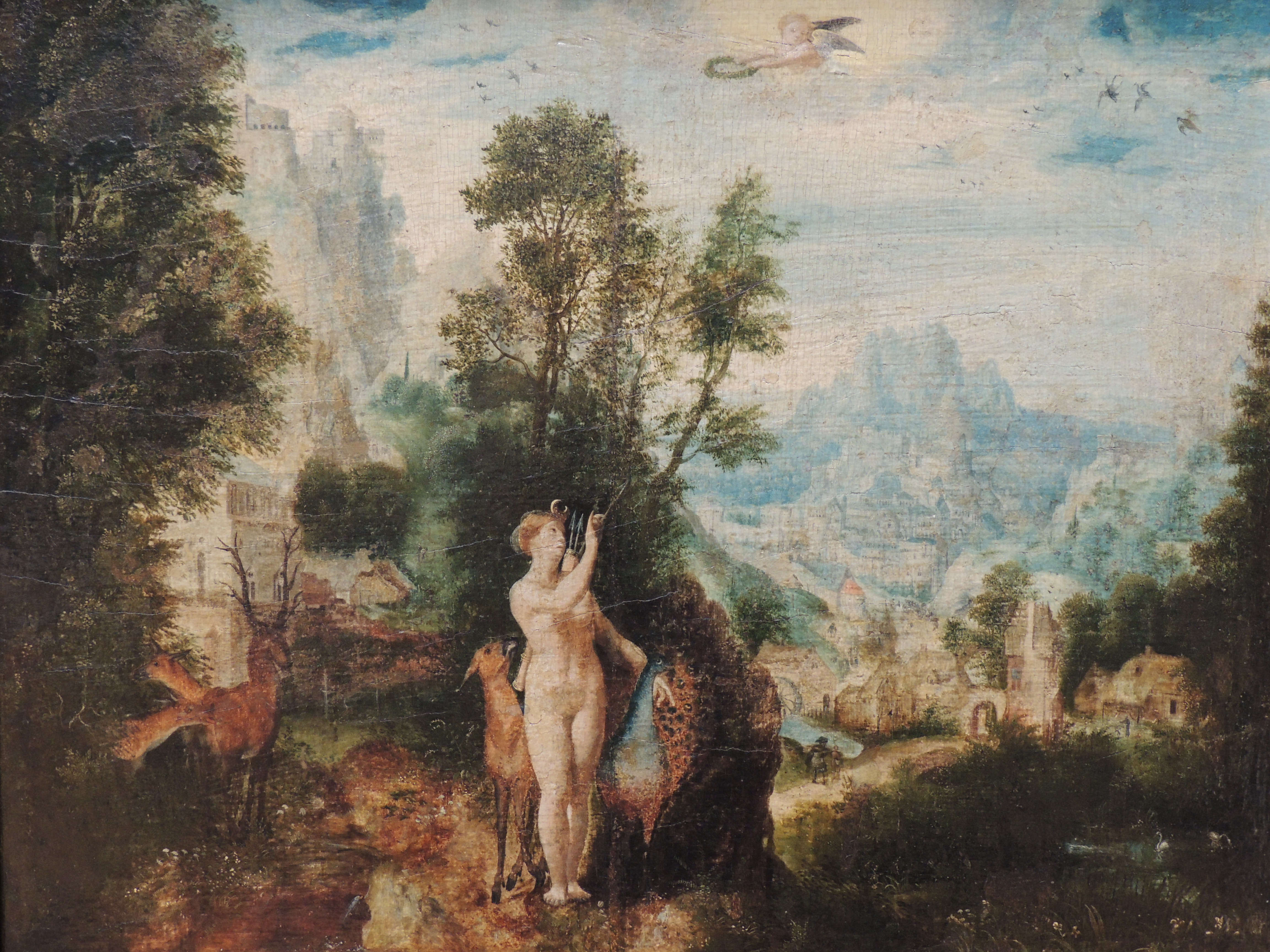
(Original source)
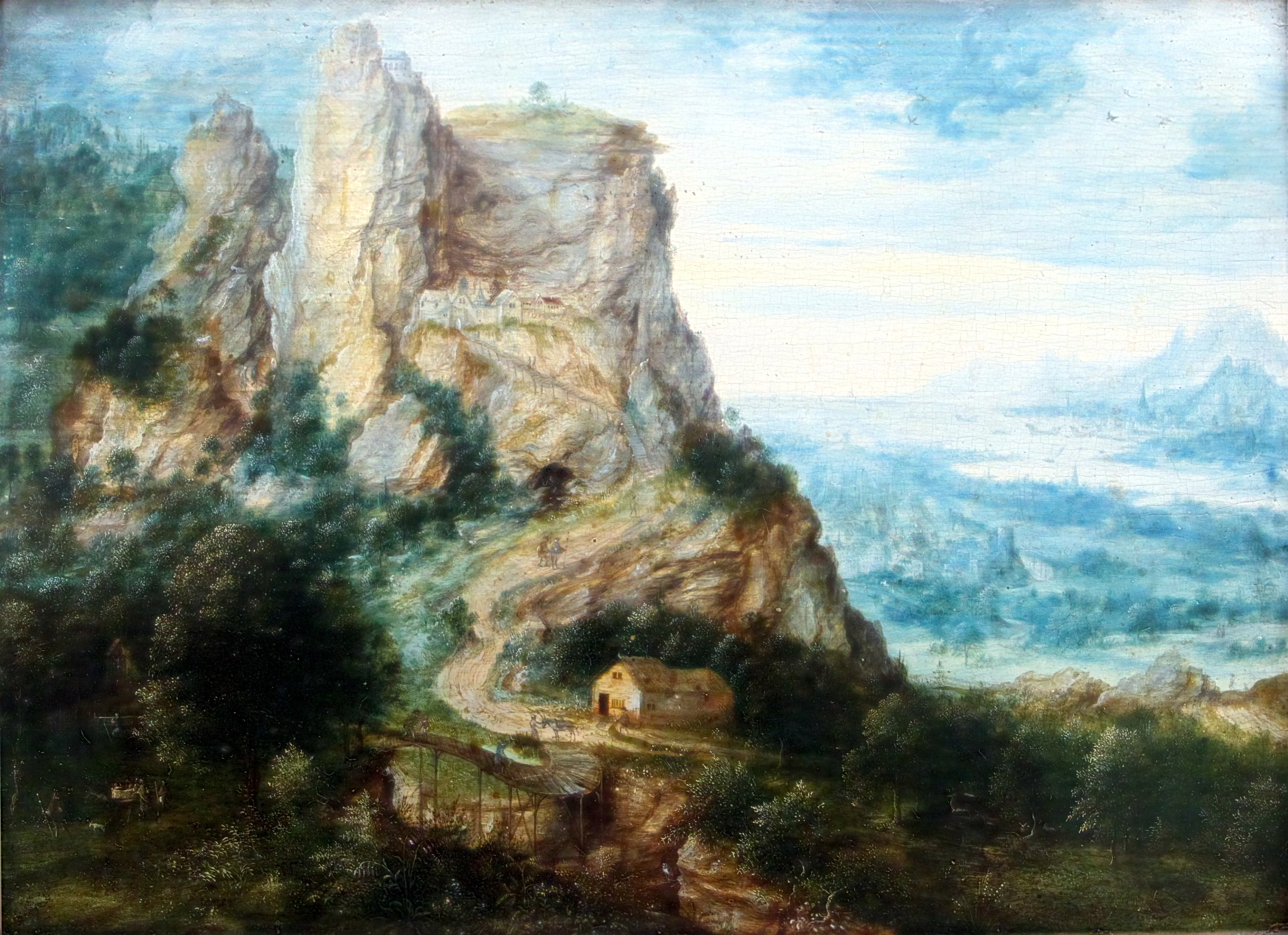
(Multiple sources 27 )
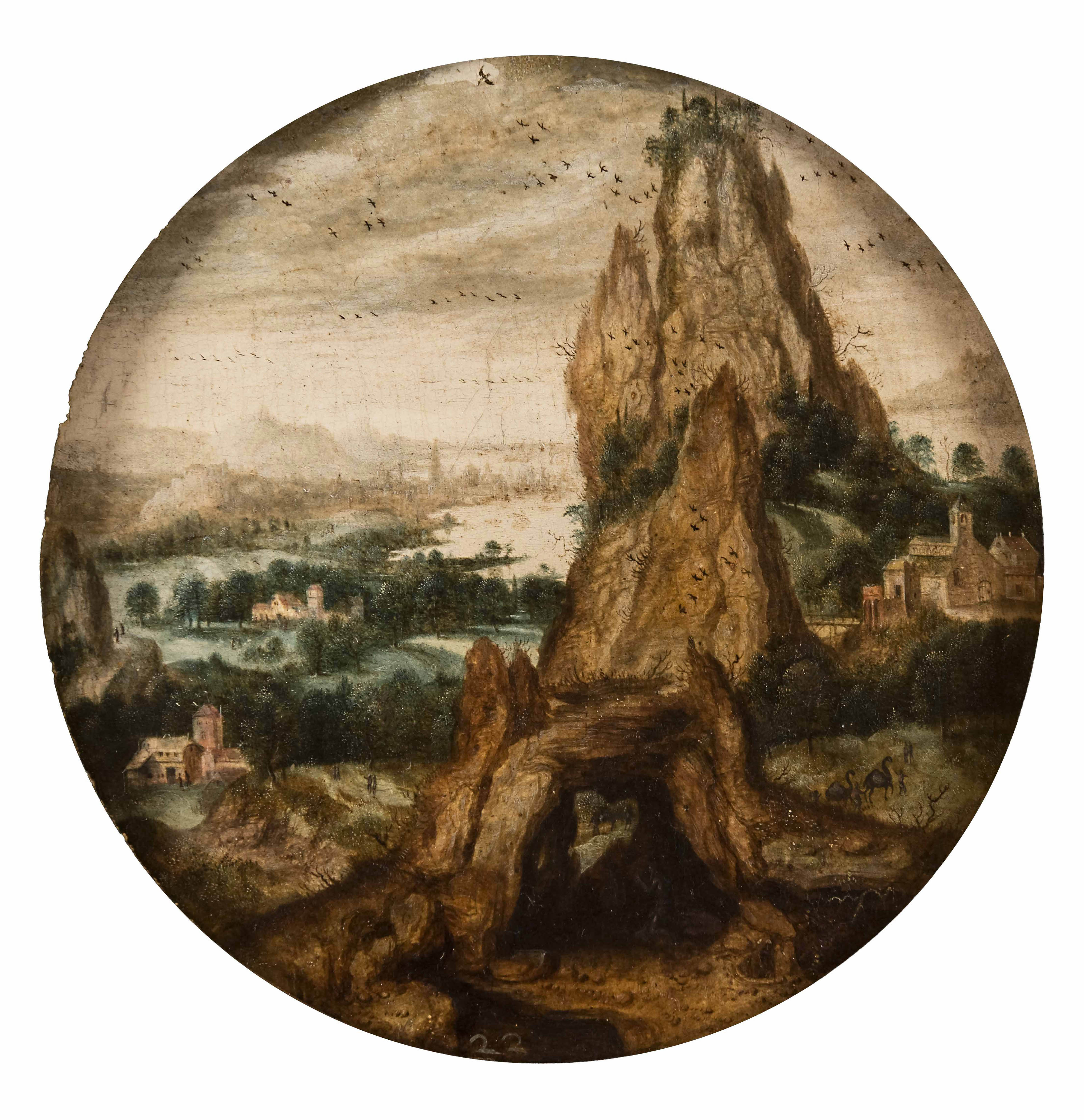
(Original source)
And in an homage to what got me started down this rabbithole owlhole, a similar Forge piece.
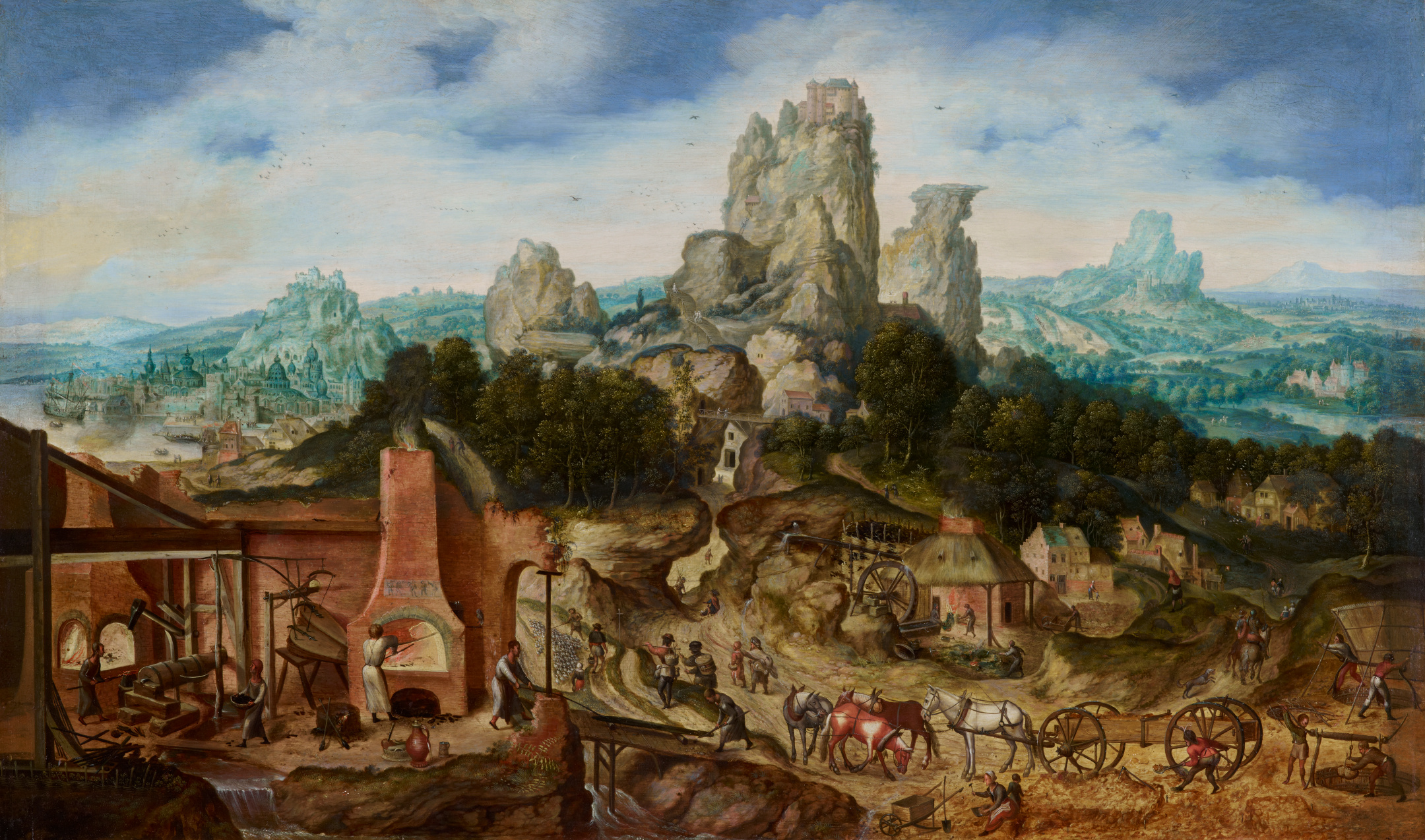
(Original source)
And last but not least...two owls! 28 I can't tell if the ground on this one looks like a face or if I've just developed pareidolia from constantly squinting for owls.
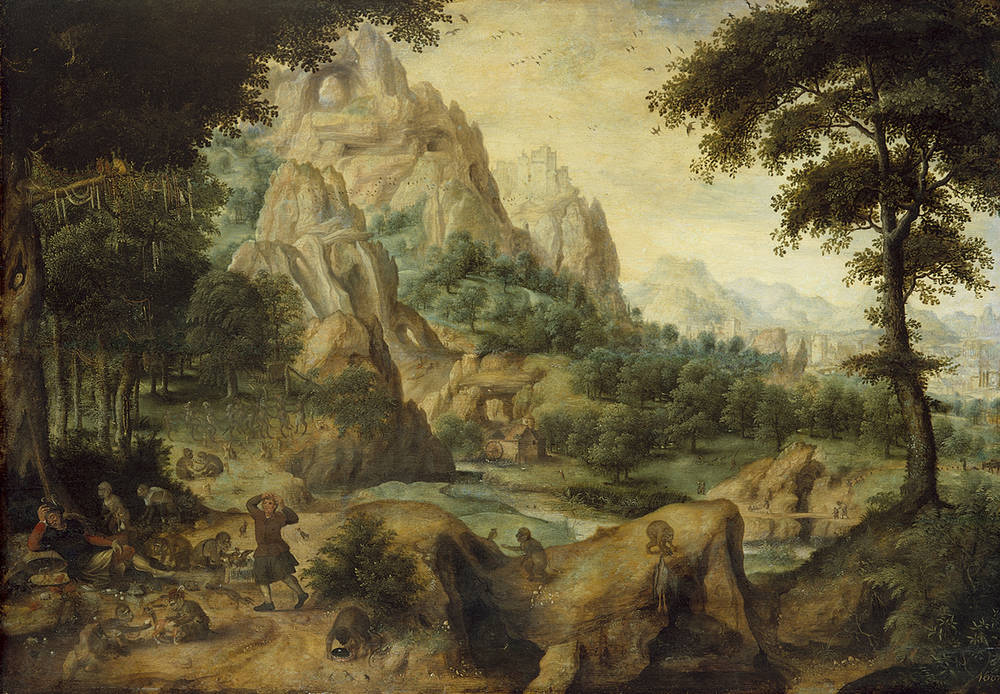
(Original source)
Congratulations!
That's all of them! I hope you enjoyed finding them, because I certainly enjoyed curating them (and a great reason to take detailed looks at cool art). Let me know how many of them you found: including the first painting I saw in person, there was a total of 29 paintings and 30 owls (because the last one had two). If you were really good you found all of them...
...but did you notice the Waldos? There's three hidden in images before we get to 'Where's Owldo'. Bonne chance!
-
Medusa is Caravaggio's better-known piece there, but I much preferred Bacchus—placid where he's usually revelrous, dirty pillows concealed beneath the opulence, leaves beginning to brown and fruit beginning to rot, a delicate Venetian tazza held in dirty fingers—a god subtly on the turn.
↩︎ -
Though in my opinion Primavera gets slept on. Venus shows one nipple and everyone loses their mind!
↩︎ -
I prefer to not look at art through my phone, so my photos are more akin to digital bookmarks. ↩︎
-
Also called Landscape with a Foundry or Landscape with a Metal Foundry or Landscape with Forge—as we'll see, both met de Bles and his works are more mystery than certainty, making consistent naming a challenge. ↩︎
-
At this point in the trip I'd seen enough religious iconography in tempera on wooden panels with gold leaf featuring a baby Jesus to last me a lifetime. I think I lost the final shred of my patience in the room explaining the difference between 1300s and 1400s wood choices for visually identical panels. You can say a lot about modern art but at a minimum it's varied. ↩︎
-
Maybe my favorite artist for what he does with light and trees. His piece Sunlight and Shadow is on display at the de Young in San Francisco and I have multiple photos on my phone of it from loving it every time I go.
↩︎ -
It's all well and good that we don't want to name species after people anymore but what's the line on gods? Medusa was cursed by Athena because she was raped by Poseidon. Talk about victim blaming! And now we commemorate Athena in this cute little owl??
↩︎ -
Well, mostly. If you look closely you'll notice these are actually different pieces—it's easiest to see in the glen above the forge on the left. We'll come back to this discrepancy, but the owl's in the same spot in both pieces so don't worry for now. ↩︎
-
I'm honorbound to confess that V beat me to it at the time. ↩︎
-
I'm not sure if they're still worried about this. Maybe the new evil is LLM citations, not Wikipedia. Maybe the new evil is that no one looked at a primary source. Maybe it's that no one has even looked at the paper they turned in. It's a rough time to be a high school English teacher. ↩︎
-
Admittedly with this much ambiguity it's hard to firmly call something 'wrong'. Maybe we should get a Lean proof involved to standardize truth. ↩︎
-
Unfortunately there's no known owl in it, though there are a lot of animals.
↩︎ -
"met de Bles" is not really a last name, it's an epithet meaning "with the blaze" in Dutch. This ostensibly refers to a white streak in his hair, which is referenced in van Mander's 1604 Het Schilder-Boeck (though unfortunately not capturable by Jan Wierix's 1572 monochromatic engraving).
↩︎ -
Terminus ante quem or TAQ for 'limit before which', or the latest it could happen. This is in contrast to Terminus post quem, or TPQ for 'limit after which', or the earliest something could happen. Thus any event is bounded by [TPQ..TAQ], or in the case of his death, [1550..1567]. ↩︎
-
Wikipedia references "recently discovered contemporary documents" but an edit conjured that terminology out of nowhere, and likely just stems from a misreading of "before 1567" (I emailed RKD to find out). ↩︎
-
Louisa Wood Ruby has a really well-written and interesting piece about how copies are handled in historical art scholarship that I enjoyed reading and recommend. ↩︎
-
If you like his pieces but aren't an owl person and take issue with me excluding the strigine-stunted, then perhaps you might like the work of fellow Dinant artist Joachim Patinir or Patenier (maybe no relation, maybe an uncle—there's no good records from 1510). He likewise hid a motif inside many of his pieces, though one slightly more crass than an owl: den kacker. Try and find the shitter in Rest on the Flight into Egypt!
Click to see the answer.
More? How about Landscape with Charon Crossing the Styx?
Unfortunately there's only three and the third doesn't have a scan in sufficient resolution to make him out. I need to make a trip out to Madrid. ↩︎ -
Also, the Flemish depictions of God are very Merlin-coded, which is fun.
↩︎ -
There's no high res version of this. What there is though, is HD zooms in B&W and some blurry colors from this photo. Armed with this and four colored detail sections (the cave, the cliff and owl, the backdrop, and God) I used Claude to synthesize them into a single image. I'd love just one high quality image, but as far as I can tell one doesn't currently exist. ↩︎
-
Shoutout to Selina at the Allen Memorial Art Museum for getting me a high quality scan of this one! ↩︎
-
Old whale illustrations are so funny, because no one was seeing them in person.
↩︎ -
I love what he does with shells: something about them feels so magical. I think it scratches some latent childhood desire to open an I Spy book.
↩︎ -
Here's the eagle from that.
Fantastic kids' book, and yet doesn't hold a candle to The Eleventh Hour. ↩︎ -
This is the Sea of Galilee where Jesus (and Peter) will later walk on water. No one ever remembers Peter walking on water. ↩︎
-
Fun fact, Hieronymus' actual name is Jheronimus van Aken. Bosch just means 'forest' and comes from being born in ’s-Hertogenbosch. A town name starting with
's-is quintessentially human: efficiently dropping the 'des' syllable but keeping it in the spelling because of course it's spelled that way, it's always been spelled that way. ↩︎ -
Hey, Roman goddess, not the Bible! Different religions are okay. Plus, peacock. ↩︎
-
A high-res version of this also doesn't exist, so Claude tried to combine this B&W scan with this blurry colored image. I think it's good enough for an owl reference, but not for much more. If someone takes a higher res scan and uploads it, I'd love to swap this out! ↩︎
-
I can't tell if the ground on this one looks like a face or if I've just developed pareidolia from constantly squinting for owls. ↩︎